Blurred Line between Federal Immigration Enforcement and Local Police Harms Communities

Five men arrived at a construction equipment company on the outskirts of Green Valley looking for work when a sheriff鈥檚 deputy offered the men a ride into town and brought them to a nearby restaurant 鈥� where Border Patrol was ready to detain them.
Unaware to the five men, an onsite security guard at the construction equipment company had called the Pima County Sheriff鈥檚 Department and U.S. Border Patrol, despite the men not causing any issues. That March 2023 incident report 鈥� obtained through a by the 桃子视频of Arizona 鈥� offers a glimpse into how local law enforcement agencies regularly assist federal immigration authorities.

Court Finds Sheriff Nanos Violated Arizona Public Records Law, New Records on Immigration Encounters Obtained – 桃子视频of Arizona
Court Finds Sheriff Nanos Violated Arizona Public Records Law, New Records on Immigration Encounters Obtained – 桃子视频of Arizona
Public records, firsthand anonymous interviews with recently deported people, and information from migrant aid organizations indicate unclear boundaries between immigration enforcement and ordinary policing. As the Trump administration expands federal, state, and local authority to enforce immigration laws, key questions emerge: What does that look like in practice? And what are the harms to local communities?
鈥淵ou could argue that there鈥檚 no inherent problem with collaboration between agencies,鈥� said John Mitchell, an immigrants鈥� rights attorney with the 桃子视频of Arizona. 鈥淏ut the reality is more complicated when you see how state and local law enforcement are given some level of unchecked power, and how they translate that into their actual enforcement.鈥�
Trump Administration Rapidly Expands Local Police and Federal Immigration Collaboration
During his second term, President Donald Trump rapidly expanded the, which allows local law enforcement agencies to enter into agreements with U.S. Immigration and Customs Enforcement (ICE) and assume limited federal immigration enforcement duties.
At the start of 2025, 133 state and local agencies participated in the program. By February 2026, ICE had signed an additional 1,079 agencies to 287(g) agreements, according to the 桃子视频report 鈥�Deputized for Disaster.鈥� One of those newly signed agencies is the Utah County Sheriff鈥檚 Office with its Task Force Model, which gives local police the authority to investigate immigration status of anyone they come across, including witnesses and victims of criminal investigations. It could even happen during a traffic stop.
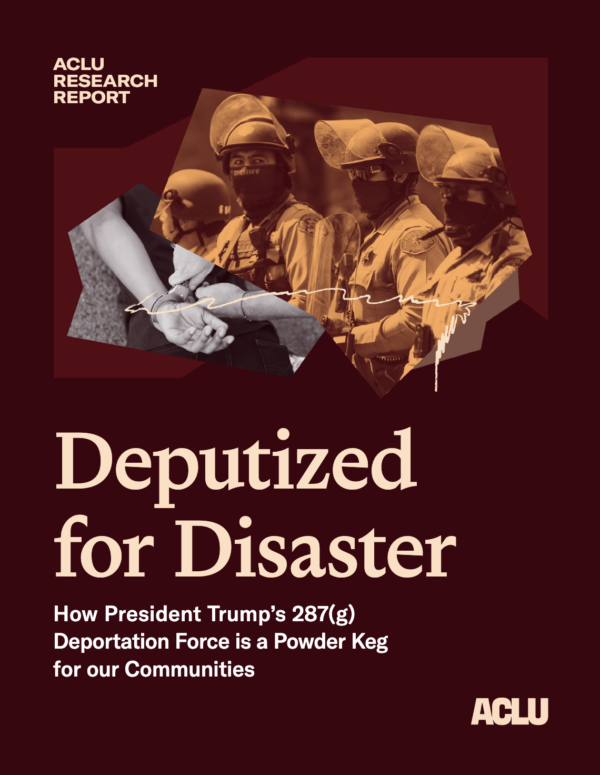
Deputized for Disaster
Deputized for Disaster
Andres, a father from Mexico, moved to Utah to reunite with his daughter. About a year later, in November 2025, a Utah County sheriff鈥檚 deputy pulled him over for a traffic infraction, he said. After Andres showed his Mexican identification, the deputy called immigration authorities. He was detained for about 24 days before being deported to Nogales, Sonora, a major border city in Mexico south of Arizona, where he shared his experience with the 桃子视频of Arizona.
The Task Force Model can lead to racial profiling, according to the 桃子视频report 鈥� which means police often use an individual鈥檚 perceived race, ethnicity, or national origin to determine whether to investigate the person for legal violations, including those related to immigration status. But racial profiling is not unique to 287(g) agreements. It is a longstanding and troubling practice documented among law enforcement agencies, including those that are not actively participating in the program. And this isn鈥檛 only happening in Arizona. As of October, more than 2,500 cities and states nationwide have signed 287(g) agreements.
Local Law Enforcement Operate Without Accountability
In Arizona, the Pima and Santa Cruz County sheriff鈥檚 offices have no active 287(g) agreements. Still, incident reports obtained show instances of assistance and coordination with federal immigration authorities.
In September 2025, a Santa Cruz County sheriff鈥檚 deputy pulled over a driver for a cracked windshield. When the deputy approached the driver鈥檚 window, he noticed three men in the backseat.
鈥淚 asked [the driver] to tell me what was going on. I added that I already knew what was occurring,鈥� the deputy wrote in the incident report.The driver said he had picked up the men in Nogales, Arizona and was taking them to Phoenix. According to the incident report, the deputy detained the driver in their patrol unit and activated the child locks on the civilian vehicle to prevent the other three men from leaving. Border Patrol agents arrived shortly after and took over.
Mitchell cautioned that incident reports are one-sided accounts written from an officer鈥檚 perspective. And in this case, the deputy鈥檚 report lacked enough detail to establish suspicion of a crime within the sheriff鈥檚 jurisdiction.
鈥淪tate and local law enforcement officers don鈥檛 have the same amount of training and specialized background to distinguish border crimes from immigration violations,鈥� Mitchell said. 鈥淎nd building off of that, you see a lot of oversimplification and bias creep into the actual enforcement practices of state and local police.鈥�
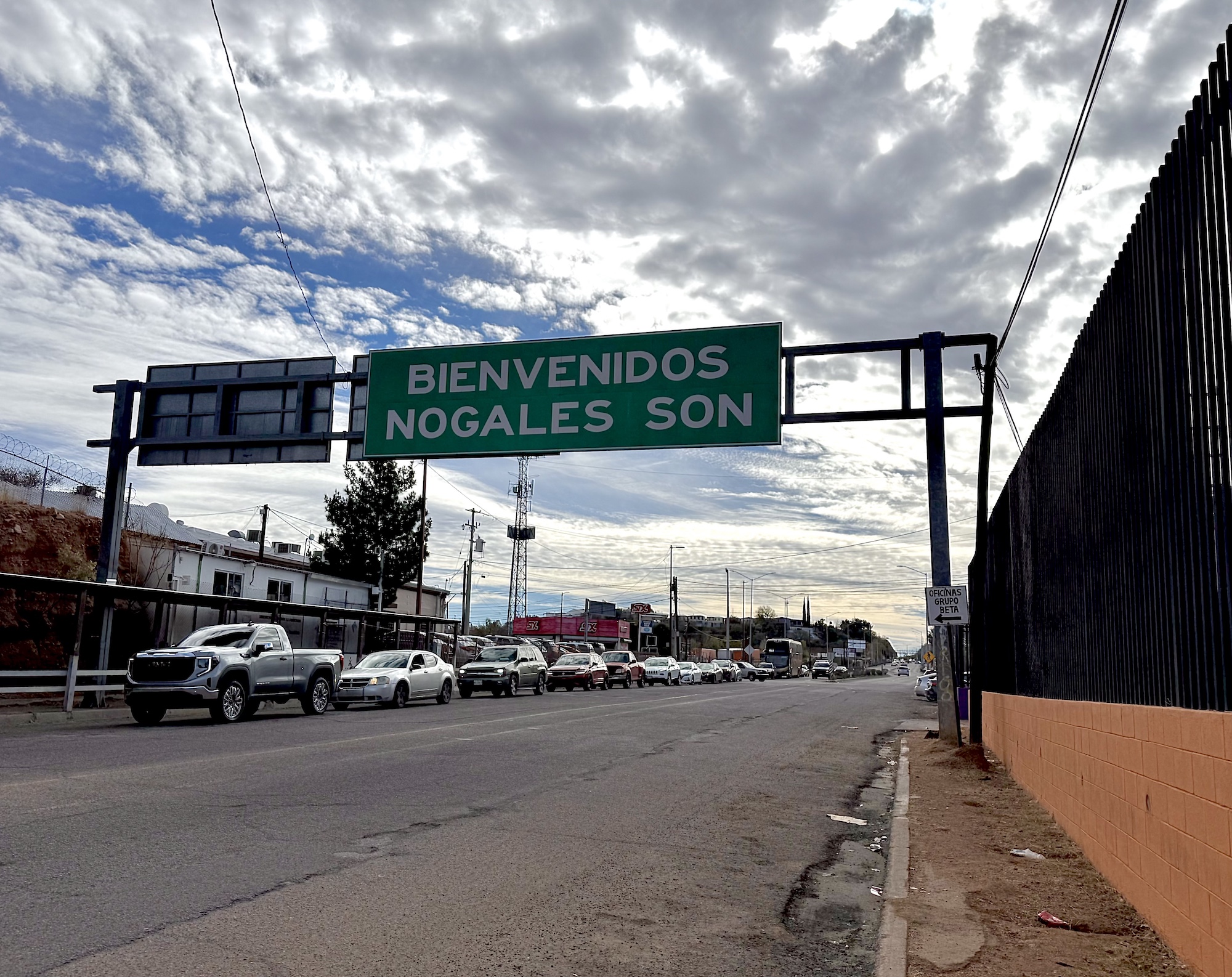
As he sat inside a migrant shelter in Nogales, Sonora, a border city in Mexico, last December, Carlos, a man from Mexico who lived in the United States for four years, recalled the moment of his arrest. He said a sheriff鈥檚 deputy in Twin Falls, Idaho pulled him over while on his way to work one morning, saying Carlos had resembled the description of a suspect in an open case. When Carlos handed his Mexican passport, the deputy called ICE and laughed as he handcuffed Carlos. Carlos said he believed that the deputy鈥檚 reaction had been primarily based on racial profiling 鈥� an example of how racial bias and xenophobia creeps into law enforcement practices and is often not addressed by training or other accountability measures.
As Civilians Exercise Rights, Officers Turn to Brutal Force
Unlawful law enforcement tactics are well documented, which is why Mitchell noted that it鈥檚 important for individuals to know how to exercise their constitutional rights.
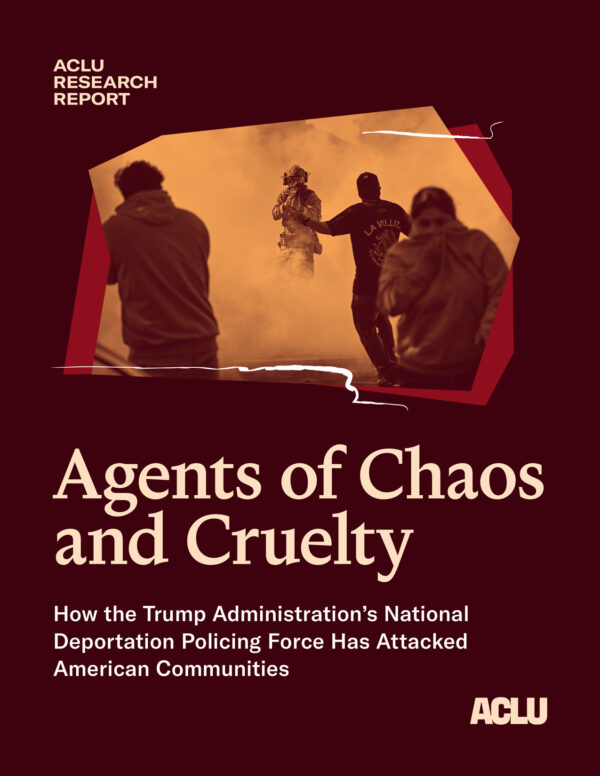
Immigrants' Rights
Agents of Chaos and Cruelty: How the Trump Administration's National Deportation Policing Force Has Attacked American Communities
Immigrants' Rights
Agents of Chaos and Cruelty: How the Trump Administration's National Deportation Policing Force Has Attacked American Communities
Miguel, a father who was deported to Nogales, Sonora last winter, said an SUV cornered his car as he drove on a highway in Seattle and forced him to pull over. Three men, who didn鈥檛 identify themselves, began questioning Miguel about his immigration status. Miguel showed them his Washington driver license, then the men called ICE. Given their lack of uniforms and badges, Miguel questioned whether the men were immigration officers. But he complied out of fear of escalating the situation into a violent encounter.
Mitchell noted: 鈥淧eople have no obligation to follow their lawful commands until they have identified themselves as law enforcement agents. But in practice, that鈥檚 not how it works.鈥�
鈥淟aw enforcement officers should not be escalating a situation, but that is not at all what we’re seeing now,鈥� Mitchell said. 鈥淲e are seeing agents using violence and excessive force and other unlawful tactics in order to fulfill the aims of the Trump administration.鈥�
The migrant aid organization, (KBI), shared the story of Jairo, a lawful permanent resident who lived in Arizona for 22 years. After dropping his son at a bus stop, several men approached his vehicle and identified themselves as ICE agents but showed no identification.
Through his window, Jairo repeatedly told them he was a permanent resident. But the men broke into his car, then assaulted and arrested him. When Jairo鈥檚 wife tried to intervene, the men beat her too. KBI said she had a miscarriage two days later. Jairo was deported to Mexico.
In another instance last May, ICE agents forcibly entered the Tucson home of Karla Toledo, a DACA recipient who has lived most of her life in the United States. When Toledo demanded a warrant, ICE agents forced their way into her home without showing one.
鈥淒o you exercise your rights, or do you keep yourself insulated from the possibility of a law enforcement agent escalating the situation?鈥� Mitchell said. 鈥淭hat should never be a choice that people have to make.鈥�
桃子视频Continues to Track Patterns and Monitor New Practices
These documented encounters with law enforcement authorities reveal patterns about how an agency operates, Mitchell said. Additionally, they help infer how an agency might enforce new laws when given expanded authority.
For example, the 桃子视频of Arizona continues to monitor the implementation of Arizona鈥檚 鈥� which grants local police authority to enforce violations of illegal entry from a foreign country.
Know Your Rights under Proposition 314 – 桃子视频of Arizona
Know Your Rights under Proposition 314 – 桃子视频of Arizona
鈥淚t opens up a number of concerning possibilities,鈥� Mitchell said. 鈥淲e don鈥檛 know how local law enforcement is being trained to investigate and enforce this law. We also don鈥檛 know how state courts might treat these new types of charges.鈥�
One thing remains clear and urgent: As immigration enforcement expands, Mitchell said, local and state agencies need clear policies governing how officers and agents are expected to respond.
鈥淟aw enforcement agencies at every level, from rural county sheriff’s departments to ICE, routinely violate people鈥檚 rights under the guise of immigration enforcement,鈥� Mitchell said. 鈥淐ongress, states, and local governments must do better to support communities by creating tools for meaningful accountability in the face of these abuses.鈥�
Related 桃子视频
Related Content
-
News & CommentaryNov 2026

Immigrants' Rights
What 'let The Record Show' Reveals About The Right For Undocumented Children To Go To Public School. Explore News & Commentary.What 'Let the Record Show' Reveals About the Right for Undocumented Children to go to Public School
The ACLU鈥檚 latest podcast episode tells the story of the 1982 Supreme Court case that established that undocumented children cannot be denied access to free public school education. The case sets an important precedent as the presence of immigration enforcement in our public spaces has expanded and undocumented students face increasing intimidation in the face of ICE. -
PodcastNov 2026

Immigrants' Rights
Racial Justice
Which Children Get To Attend Public School?. Explore Podcast.Which Children Get to Attend Public School?
-
Press ReleaseNov 2026

Immigrants' Rights
Supreme Court To Hear Challenge To Trump Proclamation Eliminating Asylum. Explore Press Release.Supreme Court to Hear Challenge to Trump Proclamation Eliminating Asylum
WASHINGTON 鈥� The Supreme Court has granted review in Mullin v. RAICES, a challenge to President Trump鈥檚 proclamation completely shutting down asylum at the border. The 桃子视频, National Immigrant Justice Center, Center for Gender & Refugee Studies, Texas Civil Rights Project, 桃子视频of the District of Columbia, and 桃子视频of Texas brought the federal lawsuit on behalf of a nationwide class of people barred from seeking protection in the United States under this proclamation, as well as three immigrant legal service providers, Refugee and Immigrant Center for Education and Legal Services (RAICES), Las Americas Immigrant Advocacy Center, and the Florence Immigrant & Refugee Rights Project. The federal district court in Washington, D.C. and the U.S. Court of Appeals for the D.C. Circuit both rejected the Trump administration鈥檚 unlawful proclamation barring people from seeking asylum by invoking Section 212(f) of the Immigration and Nationality Act and a nonexistent 鈥渋nvasion.鈥� The lower federal courts ruled in the plaintiffs鈥� favor because the Trump administration鈥檚 action is contrary to laws enacted by Congress to ensure that people receive an opportunity to have their asylum claims heard. The Supreme Court granted the government鈥檚 petition to hear the case, and argument is expected in spring 2027. The following is reaction to the Supreme Court decision to hear the case: 鈥淭he president does not have the right to unilaterally override the protections Congress has afforded those fleeing danger,鈥� said Lee Gelernt, lead counsel and deputy director of the ACLU鈥檚 Immigrants鈥� Rights Project. 鈥淭he courts are right to reject this unprecedented power grab that would put countless lives in danger. We look forward to making our case before the Supreme Court.鈥� 鈥淭he plaintiffs in this case fled persecution and torture, including political imprisonment and threats from the Taliban. Yet, the Trump administration refused to honor its obligation to consider them for asylum,鈥� said Keren Zwick, executive director of the National Immigrant Justice Center. 鈥淪ome plaintiffs were removed to third countries and then pushed back to the very place they fled; others faced prolonged detention without access to legal due process. Even after the lower courts rejected the president鈥檚 proclamation, the administration has continued to block access to asylum at the U.S. border. This vicious attack on due process and human rights has put thousands of lives in danger. We are honored to represent these asylum seekers, and their advocates, as this important case proceeds.” 鈥淔or nearly two years, the Trump administration’s unlawful asylum shutdown has deprived people seeking safety of their rights, placing vulnerable families, children, and adults in harm’s way,鈥� said Melissa Crow, director of litigation at the Center for Gender & Refugee Studies (CGRS). 鈥淩efugees fleeing persecution and torture have been denied access to the asylum process and deported to danger. The lower courts got it right: The president cannot unilaterally rewrite our immigration laws and defy the will of Congress to get its way. It is now up to the Supreme Court to decide whether it will uphold the rule of law or bend to the administration’s agenda.鈥� 鈥淣o one seeking safety at our borders should be denied that opportunity. It is incredibly timely that the Supreme Court will hear our case, as the nation saw a clear mandate from midterm voters earlier this month. Our communities made their voices heard on immigration, economic justice, and the many misdirections this administration has taken,鈥� said Rochelle Garza, president of the Texas Civil Rights Project. 鈥淎sylum seekers deserve to have their rights protected, and we will continue fighting to ensure that the dedicated organizations who serve them directly have the ability to do so.鈥� 鈥淭he Supreme Court faces a stark choice. Respect the rule of law and uphold the right to asylum, or allow the executive to decide on its own who gets to ask for safety,鈥� said Nicolas Palazzo, interim executive director of Las Americas Immigrant Advocacy Center. 鈥淔or the people we represent in El Paso and along the border, the court鈥檚 answer will decide whether they find protection or are sent back to the danger they fled.鈥� 鈥淐ongress has determined that the United States has not only a moral but a legal obligation to provide people seeking safety at our borders a process to access protection. This attempt to unilaterally stop all asylum processing at the border is an unprecedented and illegal overreach that puts countless people in danger,鈥� said Laura St. John, the legal director for the Florence Immigrant & Refugee Rights Project. 鈥淎cross this country, the American people firmly reject an unchecked executive that operates with disregard for the law,鈥� said Faisal Al-Juburi, co-chief executive officer of RAICES. 鈥淥ur system of checks and balances exists for moments precisely like this 鈥� to ensure no single branch can consolidate power at will. By agreeing to hear this case, the Supreme Court faces a critical constitutional responsibility: to uphold the limits of executive power and make clear that no president is beyond congressional authority. Future generations will look back at this decision, and the court must demonstrate that the rule of law applies equitably to all.鈥� -
U.S. Supreme CourtNov 2026

Immigrants' Rights
Rhoney V. Barbosa Da Cunha. Explore Case.Rhoney v. Barbosa da Cunha
The Supreme Court will hear Rhoney v. Barbosa da Cunha, stemming from our lawsuit challenging the Trump administration鈥檚 unlawful policy that subjects millions of immigrants to mandatory detention without access to bond hearings. Mandatory detention has played a key role in this administration鈥檚 cruel and lawless campaign of mass deportations. This case will decide whether the government can upend how our laws have been understood and applied for decades to lock up millions of immigrants without a chance to show there is no justification for their detention while they fight their removal. The 桃子视频, New York Civil Liberties Union, Law Office of Paul O鈥橠wyer, Northwest Immigrant Rights Project, and MacArthur Justice Center are counsel in this case. Oral argument is expected in late February or early March 2027.