What 'Let the Record Show' Reveals About the Right for Undocumented Children to go to Public School

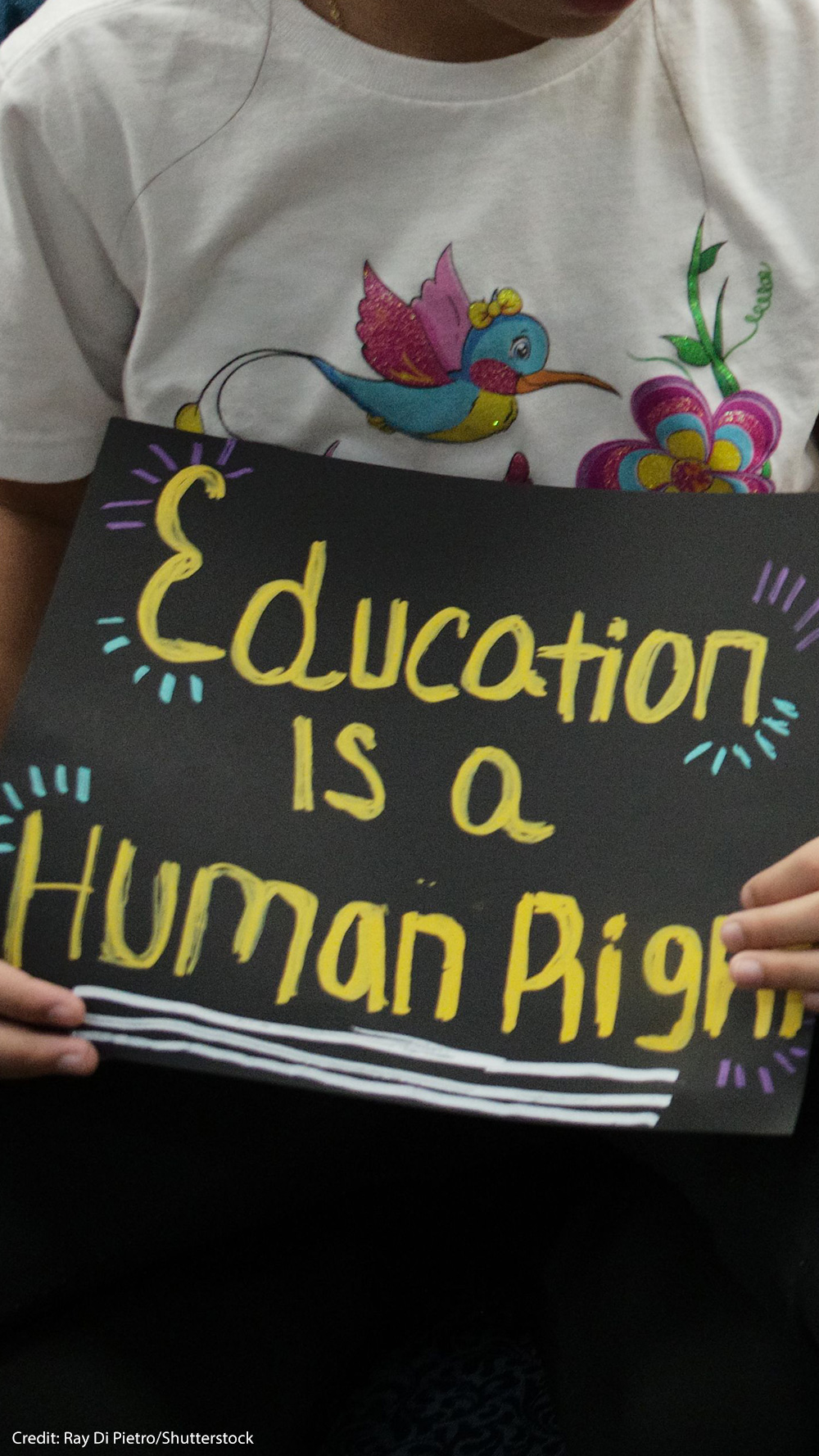
Nearly 50 years ago in Tyler, Texas, Rosario Robles walked her children to school on their first day. Robles and her husband Jose, a pipe factory employee, had lived in Tyler for five years. They were undocumented, but they owned their own home and paid taxes that went to schools.
But , the principal told them, 鈥淣o birth certificates, no school.鈥� He then placed Robles and her children in his car and drove them home.
Robles learned that she would have to pay $1,000 per student per year for her children, who were undocumented, to go to school. With five children, Robles would have to pay $5,000 each year. Today, that amounts to $30,000.
In our latest episode of 鈥�Let the Record Show,鈥� the ACLU鈥檚 new history podcast, hosts Matt Beat and Shereen Marisol Meraji broke down Plyer v. Doe, a Supreme Court case that ensured undocumented children can access public education for free 鈥� and without fear. Today, the Trump administration has used mass deportations and a national policing force as an assault on our rights and liberties. Part of its agenda includes challenges to Plyler from the Trump administration and its allies. Here, we take a closer look at how Plyler protects undocumented children under the Trump administration today.
Setting Important Protections for Undocumented Students
The issues in Plyler v. Doe arise after Texas amended its state education code in 1975, authorizing public school districts to charge undocumented students tuition fees or exclude them altogether. This led the school board in Tyler to implement a $1,000 tuition fee for each student that could not establish citizenship. Many of these students were Mexican but had spent most of their lives in Texas. If their families couldn鈥檛 afford the fees, the children were sent home, like the Robles.
By September 1977, the Mexican American Legal Defense and Educational Fund (MALDEF) filed a lawsuit against James Plyler, the superintendent of the Tyler Independent School District for excluding undocumented students. Representing four families, MALDEF argued that Texas鈥檚 new code was unconstitutional because it violated the Equal Protection Clause of the 14th Amendment, which says no state shall 鈥渄eny to any person within its jurisdiction the equal protection of the laws.鈥�
In response, the state of Texas backed up their revised code. Their most contentious argument was that undocumented students do not have the right to claim equal protection because they aren鈥檛 considered people under the Constitution. On top of that, the Constitution does not establish public education as a right to begin with.
Judge William Wayne Justice heard the case in 1977. He ruled that children in Texas should be able to attend public school regardless of their immigration status. Texas appealed twice, and the case went up to the Supreme Court, but in both cases, the courts ruled in favor of the families.
Ultimately, the Supreme Court ruled that Texas鈥� revised education code was unconstitutional. The case set a new precedent: Undocumented children in K-12 public schools would now be protected under the Constitution.
Despite dissenting, even Supreme Court Justice Warren Earl Burger noted the importance of a robust education system: “Were it our business to set the nation’s social policy, I would agree without hesitation that it is senseless for an enlightened society to deprive any children, including illegal aliens, of an elementary education.”
Undocumented Students Face Fear in Schools Under Trump Administration Today
On its very first day in office, the Trump administration rescinded a longstanding policy that generally protected certain areas, including schools, from immigration enforcement. ICE arrests at and near schools, bus stops, and routes to and from school have made children and parents afraid to go to school. Schools across the country have seen the impact in lowered enrollment rates and the detrimental effect that extends beyond their undocumented students. Last month, the 桃子视频released 鈥�76 Ways Mass Deportation Is Breaking Our Democracy,鈥� a report that outlines the impact mass deportations are having on our democracy and public spaces, such as schools.
In Minnesota, Ryan Doxsey observed ICE operations at a school during morning drop-off. There, he was approached by immigration agents who told him that he would be added to a list of domestic terrorists. Situations like these have spread across communities as federal, state, and local law enforcement agencies have begun carrying out arrests under immigration charges, conducting traffic stops, and setting up checkpoints for 鈥渇ishing expeditions鈥� or to look for individuals to deport.
If parents keep their kids at home because immigration authorities are patrolling campuses or transit systems that take children to schools, that undermines Plyler.
In order to ensure the rights in Plyler are meaningfully upheld, schools have a responsibility to keep immigration officials out of their buildings. States across the country, like Kansas, Minnesota, and Florida, have proposed laws to limit immigration enforcement鈥檚 access to public schools. No parent should have to choose between their child鈥檚 education or their family鈥檚 safety.
How Undocumented Immigrants Can Protect Themselves
If you are undocumented and your children attend public school, or if you are concerned about the well-being of immigrant students, here鈥檚 what you need to know:
Learn more about your rights on the ACLU’s Know Your Rights website.
Hold your public schools accountable: schools may designate more areas as private, providing students with spaces for privacy to learn. Immigration officials are not allowed in private spaces without a judicial warrant.
Learn more about steps schools can take to ensure all students feel safe in classrooms through the ACLU’s Immigration Enforcement Guidance for Schools,
Contact your state鈥檚 桃子视频affiliate for more support.
Related 桃子视频
Related Content
-
PodcastNov 2026

Immigrants' Rights
Racial Justice
Which Children Get To Attend Public School?. Explore Podcast.Which Children Get to Attend Public School?
-
Press ReleaseNov 2026

Immigrants' Rights
Supreme Court To Hear Challenge To Trump Proclamation Eliminating Asylum. Explore Press Release.Supreme Court to Hear Challenge to Trump Proclamation Eliminating Asylum
WASHINGTON 鈥� The Supreme Court has granted review in Mullin v. RAICES, a challenge to President Trump鈥檚 proclamation completely shutting down asylum at the border. The 桃子视频, National Immigrant Justice Center, Center for Gender & Refugee Studies, Texas Civil Rights Project, 桃子视频of the District of Columbia, and 桃子视频of Texas brought the federal lawsuit on behalf of a nationwide class of people barred from seeking protection in the United States under this proclamation, as well as three immigrant legal service providers, Refugee and Immigrant Center for Education and Legal Services (RAICES), Las Americas Immigrant Advocacy Center, and the Florence Immigrant & Refugee Rights Project. The federal district court in Washington, D.C. and the U.S. Court of Appeals for the D.C. Circuit both rejected the Trump administration鈥檚 unlawful proclamation barring people from seeking asylum by invoking Section 212(f) of the Immigration and Nationality Act and a nonexistent 鈥渋nvasion.鈥� The lower federal courts ruled in the plaintiffs鈥� favor because the Trump administration鈥檚 action is contrary to laws enacted by Congress to ensure that people receive an opportunity to have their asylum claims heard. The Supreme Court granted the government鈥檚 petition to hear the case, and argument is expected in spring 2027. The following is reaction to the Supreme Court decision to hear the case: 鈥淭he president does not have the right to unilaterally override the protections Congress has afforded those fleeing danger,鈥� said Lee Gelernt, lead counsel and deputy director of the ACLU鈥檚 Immigrants鈥� Rights Project. 鈥淭he courts are right to reject this unprecedented power grab that would put countless lives in danger. We look forward to making our case before the Supreme Court.鈥� 鈥淭he plaintiffs in this case fled persecution and torture, including political imprisonment and threats from the Taliban. Yet, the Trump administration refused to honor its obligation to consider them for asylum,鈥� said Keren Zwick, executive director of the National Immigrant Justice Center. 鈥淪ome plaintiffs were removed to third countries and then pushed back to the very place they fled; others faced prolonged detention without access to legal due process. Even after the lower courts rejected the president鈥檚 proclamation, the administration has continued to block access to asylum at the U.S. border. This vicious attack on due process and human rights has put thousands of lives in danger. We are honored to represent these asylum seekers, and their advocates, as this important case proceeds.” 鈥淔or nearly two years, the Trump administration’s unlawful asylum shutdown has deprived people seeking safety of their rights, placing vulnerable families, children, and adults in harm’s way,鈥� said Melissa Crow, director of litigation at the Center for Gender & Refugee Studies (CGRS). 鈥淩efugees fleeing persecution and torture have been denied access to the asylum process and deported to danger. The lower courts got it right: The president cannot unilaterally rewrite our immigration laws and defy the will of Congress to get its way. It is now up to the Supreme Court to decide whether it will uphold the rule of law or bend to the administration’s agenda.鈥� 鈥淣o one seeking safety at our borders should be denied that opportunity. It is incredibly timely that the Supreme Court will hear our case, as the nation saw a clear mandate from midterm voters earlier this month. Our communities made their voices heard on immigration, economic justice, and the many misdirections this administration has taken,鈥� said Rochelle Garza, president of the Texas Civil Rights Project. 鈥淎sylum seekers deserve to have their rights protected, and we will continue fighting to ensure that the dedicated organizations who serve them directly have the ability to do so.鈥� 鈥淭he Supreme Court faces a stark choice. Respect the rule of law and uphold the right to asylum, or allow the executive to decide on its own who gets to ask for safety,鈥� said Nicolas Palazzo, interim executive director of Las Americas Immigrant Advocacy Center. 鈥淔or the people we represent in El Paso and along the border, the court鈥檚 answer will decide whether they find protection or are sent back to the danger they fled.鈥� 鈥淐ongress has determined that the United States has not only a moral but a legal obligation to provide people seeking safety at our borders a process to access protection. This attempt to unilaterally stop all asylum processing at the border is an unprecedented and illegal overreach that puts countless people in danger,鈥� said Laura St. John, the legal director for the Florence Immigrant & Refugee Rights Project. 鈥淎cross this country, the American people firmly reject an unchecked executive that operates with disregard for the law,鈥� said Faisal Al-Juburi, co-chief executive officer of RAICES. 鈥淥ur system of checks and balances exists for moments precisely like this 鈥� to ensure no single branch can consolidate power at will. By agreeing to hear this case, the Supreme Court faces a critical constitutional responsibility: to uphold the limits of executive power and make clear that no president is beyond congressional authority. Future generations will look back at this decision, and the court must demonstrate that the rule of law applies equitably to all.鈥� -
U.S. Supreme CourtNov 2026

Immigrants' Rights
Rhoney V. Barbosa Da Cunha. Explore Case.Rhoney v. Barbosa da Cunha
The Supreme Court will hear Rhoney v. Barbosa da Cunha, stemming from our lawsuit challenging the Trump administration鈥檚 unlawful policy that subjects millions of immigrants to mandatory detention without access to bond hearings. Mandatory detention has played a key role in this administration鈥檚 cruel and lawless campaign of mass deportations. This case will decide whether the government can upend how our laws have been understood and applied for decades to lock up millions of immigrants without a chance to show there is no justification for their detention while they fight their removal. The 桃子视频, New York Civil Liberties Union, Law Office of Paul O鈥橠wyer, Northwest Immigrant Rights Project, and MacArthur Justice Center are counsel in this case. Oral argument is expected in late February or early March 2027. -
Press ReleaseOct 2026
Immigrants' Rights
Immigrants鈥� Rights Organizations File Lawsuit To Stop Ice From Hiding Locations Of Detained People. Explore Press Release.Immigrants鈥� Rights Organizations File Lawsuit to Stop ICE from Hiding Locations of Detained People
BOSTON 鈥� A group of legal services organizations today filed a lawsuit challenging the federal government鈥檚 new policy of hiding the locations of thousands of people detained by U.S. Immigration and Customs Enforcement. The policy unlawfully interferes with communication between detainees, their families, and their lawyers. The lawsuit was filed in the U.S. District Court for the District of Massachusetts on behalf of Greater Boston Legal Services, Rian Immigrant Center, Florence Immigrant and Refugee Rights Project, and Amica Center for Immigrant Rights. The groups argue the new policy unlawfully blocks them from locating, communicating with, and providing legal services to their clients and potential clients. For over 16 years, the U.S. Department of Homeland Security has made the location of detained noncitizens available via its Online Detainee Locator System. In September, DHS abruptly changed course and stopped sharing the location of detained people with final orders of removal, either via the locator service or in direct response to queries from family members or attorneys. This policy of mass disappearance has thrown thousands into an administrative black box without any justification. The new policy facilitates the Trump administration鈥檚 mass deportation campaign by making it more difficult to provide detainees with access to attorneys and the judicial system 鈥� and thus more difficult to challenge unlawful detention and pursue lawful pathways to remain in the United States. Noncitizens with final orders of removal may still pursue a number of legal remedies to challenge their detention and deportation 鈥� but if they cannot access legal counsel or the courts, they may never have a chance to seek these remedies before they are deported. The lawsuit alleges that ICE鈥檚 implementation of this new policy is arbitrary and capricious, and thus a violation of the Administrative Procedure Act. The complaint also alleges that ICE鈥檚 policy violates the plaintiffs鈥� First Amendment rights. Finally, the complaint alleges violations of the Freedom of Information Act because the government failed to publish details of their new policy. The plaintiffs are asking the court to vacate the new policy, and will shortly file a motion to stay the new policy while their case proceeds. The plaintiffs are represented by the National Immigration Law Center, National Immigration Project, the 桃子视频, the 桃子视频of Massachusetts, and Annelise Araujo Law. The following are statements from the plaintiffs and their legal counsel: Attorneys representing the plaintiffs: 鈥淭he Trump administration鈥檚 new policy of mass disappearance should send a chill through everybody鈥檚 spine. By choosing to hide even the most basic information about thousands of people in its custody, the government is unlawfully blocking their access to legal counsel and the courts, and keeping desperate loved ones in the dark. This shockingly malicious policy was implemented suddenly, without any legal basis or justification, and with immediate, devastating impacts for our clients and the people they serve. The government must reverse course immediately, restore the Online Detainee Locator System, and stop hiding people in its vast network of detention facilities.鈥� Jacquelynne J. Bowman, executive director of Greater Boston Legal Services: 鈥淣o one should be denied a meaningful opportunity to defend their rights because the government has made it impossible for their lawyer to find them. Even with representation, navigating the legal system is complex for immigrants facing deportation. This arbitrary new administrative change leaves hundreds of thousands of people at risk of potentially life-altering consequences without essential legal help.鈥� Jackie Kelley, director of immigration legal services at the Rian Immigrant Center: 鈥淲e cannot allow the United States government to indefinitely disappear human beings. If we cannot locate our clients, we cannot pursue the relief for which they are legally eligible. The law gives our clients the right to seek protection. This policy obstructs that right when our clients need it most.鈥� Laura St. John, legal director at the Florence Immigrant & Refugee Rights Project: 鈥淭he Trump administration is disappearing people within the immigration detention system. This should terrify every single one of us. Thousands of people are no longer being shown on the online detainee locator system, making it impossible for attorneys to locate their clients or identify people who might need emergency legal assistance. How can people in detention possibly have access to due process and safety if there is no way for their families or advocates to know where they are being held?” Aimee Mayer-Salins, deputy program director of legal coordination at the Amica Center for Immigrant Rights: 鈥淲hen someone you love is in ICE custody, they shouldn’t simply disappear into a black hole. Families deserve to know where their loved ones are being held, and this lawsuit is about protecting that basic right.鈥� For more information about Greater Boston Legal Services et al. v. Mullin, visit: /cases/greater-boston-legal-services-et-al-v-mullin