Fighting Voter Suppression
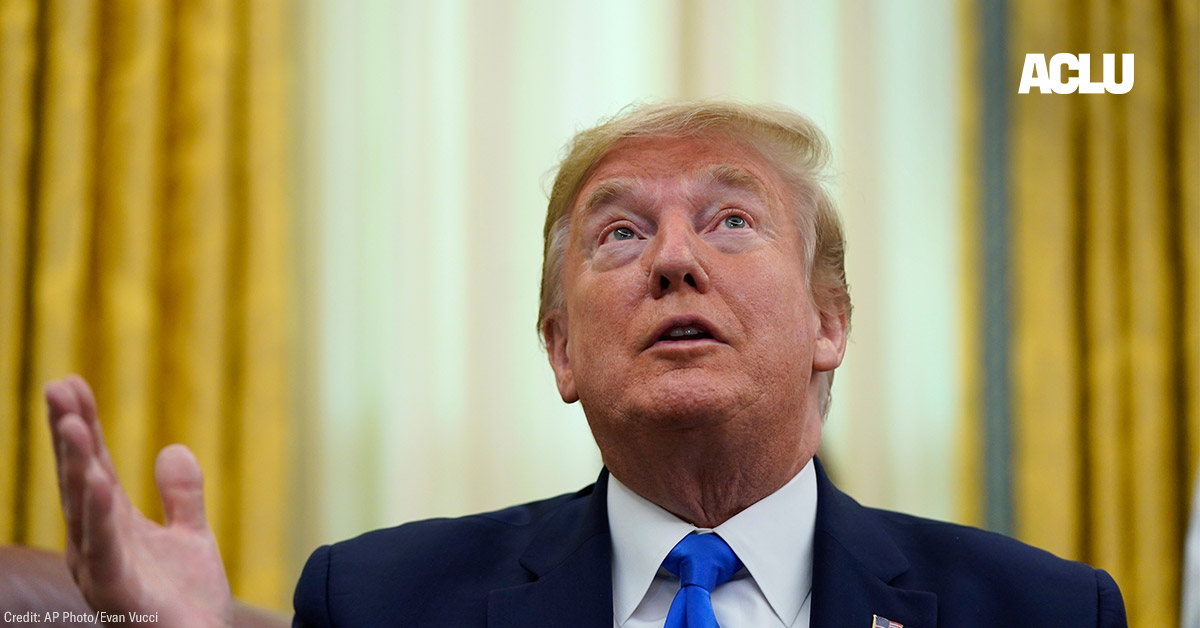
League of Women Voters of Massachusetts v. Trump
On March 31, 2026, President Trump issued a sweeping Executive Order titled "Ensuring Citizen Verification and Integrity in Federal Elections," seeking once again to seize control of election administration from Congress and the states. The Order directs federal agencies to compile lists of U.S. citizens and transmit them to states before every election, directs the U.S. Postal Service -- an independent agency established by Congress -- to create a list of "approved" mail voters, and instructs USPS to refuse to deliver ballots from voters not on that federally created list. If implemented, the Order would threaten the ability of millions of eligible citizens to cast their ballots, particularly military members, overseas citizens, the elderly, recently naturalized citizens, and voters with disabilities who rely on mail voting.
Status: Ongoing
View Case
Learn About Fighting Voter Suppression
Featured
New Hampshire
Jul 2026
Fighting Voter Suppression
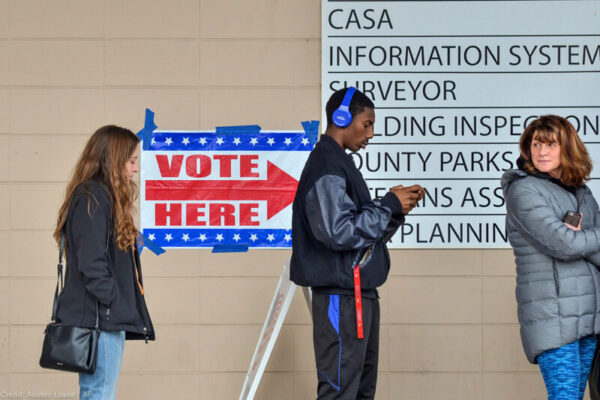
Coalition for Open Democracy v. Scanlan
This lawsuit challenges HB 1569, a new law that will make New Hampshire the only state to require every person to produce documentary proof of citizenship when they register to vote for both state and federal elections. It also challenges HB 1569鈥檚 elimination a preexisting protection for voters鈥攏amely, an affidavit option that allowed voters who faced surprise challenges to their eligibility at the polls to swear to their qualifications and cast a ballot. Accordingly, HB 1569 violates the First and Fourteenth Amendments of the U.S. Constitution by placing substantial burdens on New Hampshirites at all stages of the voting process, and will arbitrarily disenfranchise hundreds, if not thousands of qualified voters.
Washington, D.C.
Oct 2025
Fighting Voter Suppression
League of Women Voters Education Fund v. Trump
On March 25, 2025, in a sweeping and unprecedented Executive Order, President Trump attempted to usurp the power to regulate federal elections from Congress and the States. Among other things, the Executive Order directs the Election Assistance Commission鈥攁n agency that Congress specifically established to be bipartisan and independent鈥攖o require voters to show a passport or other citizenship documentation in order to register to vote in federal elections. If implemented, the Executive Order would threaten the ability of millions of eligible Americans to register and vote and upend the administration of federal elections.
On behalf of leading voter registration organizations and advocacy organizations, the 桃子视频and co-counsel filed a lawsuit to block the Executive Order as an unconstitutional power grab.
All Cases
102 Fighting Voter Suppression Cases
U.S. Supreme Court
Jul 2025
Fighting Voter Suppression
Bost v. Illinois State Board of Elections (Amicus)
Congressman Michael Bost brought suit trying to prevent Illinois from counting mail ballots that are voted by election day and received within the following fourteen days, consistent with Illinois law. The Seventh Circuit ruled that Congressman Bost lacks standing to sue. Bost sought certiorari from the U.S. Supreme Court on the question whether he has standing as a federal candidate to bring his lawsuit and have it decided on the merits.
While the 桃子视频strongly opposes Congressman Bost鈥檚 position on the merits and has repeatedly defended similar state laws from challenge, the rules that determine whether Bost has standing to even bring his anti-voter lawsuit also apply to civil rights groups when they bring suit to expand or protect the rights of voters.
Explore case
U.S. Supreme Court
Jul 2025
Fighting Voter Suppression
Bost v. Illinois State Board of Elections (Amicus)
Congressman Michael Bost brought suit trying to prevent Illinois from counting mail ballots that are voted by election day and received within the following fourteen days, consistent with Illinois law. The Seventh Circuit ruled that Congressman Bost lacks standing to sue. Bost sought certiorari from the U.S. Supreme Court on the question whether he has standing as a federal candidate to bring his lawsuit and have it decided on the merits.
While the 桃子视频strongly opposes Congressman Bost鈥檚 position on the merits and has repeatedly defended similar state laws from challenge, the rules that determine whether Bost has standing to even bring his anti-voter lawsuit also apply to civil rights groups when they bring suit to expand or protect the rights of voters.
North Dakota
Jul 2025
Fighting Voter Suppression
Turtle Mountain Band of Chippewa Indians v. Howe (Amicus)
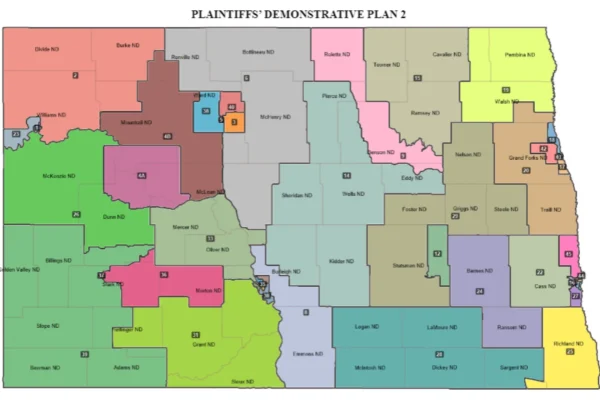
In Arkansas State Conference NAACP v. Arkansas Board of Apportionment, the 8th Circuit became the first federal appeals court to rule that private plaintiffs cannot enforce Section 2 of the Voting Rights Act. In doing so, the court left open the question whether private plaintiffs could enforce Section 2 through an alternative civil rights statute, 42 U.S.C. 搂 1983. In this case, a divided panel on the 8th Circuit has held that plaintiffs may not use Section 1983, either. If the holding stands, Section 2 of the VRA will be functionally out of reach for voters across the 8th Circuit in Arkansas, Iowa, Minnesota, Missouri, Nebraska, North Dakota, and South Dakota. On behalf of the NAACP Arkansas State Conference and the Arkansas Public Policy Panel, the 桃子视频and 桃子视频of Arkansas has filed a brief supporting the plaintiffs' request that the full Eighth Circuit rehear and correct this decision.
Explore case
North Dakota
Jul 2025
Fighting Voter Suppression
Turtle Mountain Band of Chippewa Indians v. Howe (Amicus)
In Arkansas State Conference NAACP v. Arkansas Board of Apportionment, the 8th Circuit became the first federal appeals court to rule that private plaintiffs cannot enforce Section 2 of the Voting Rights Act. In doing so, the court left open the question whether private plaintiffs could enforce Section 2 through an alternative civil rights statute, 42 U.S.C. 搂 1983. In this case, a divided panel on the 8th Circuit has held that plaintiffs may not use Section 1983, either. If the holding stands, Section 2 of the VRA will be functionally out of reach for voters across the 8th Circuit in Arkansas, Iowa, Minnesota, Missouri, Nebraska, North Dakota, and South Dakota. On behalf of the NAACP Arkansas State Conference and the Arkansas Public Policy Panel, the 桃子视频and 桃子视频of Arkansas has filed a brief supporting the plaintiffs' request that the full Eighth Circuit rehear and correct this decision.
U.S. Supreme Court
Jun 2025
Fighting Voter Suppression
O'Bannon v. King
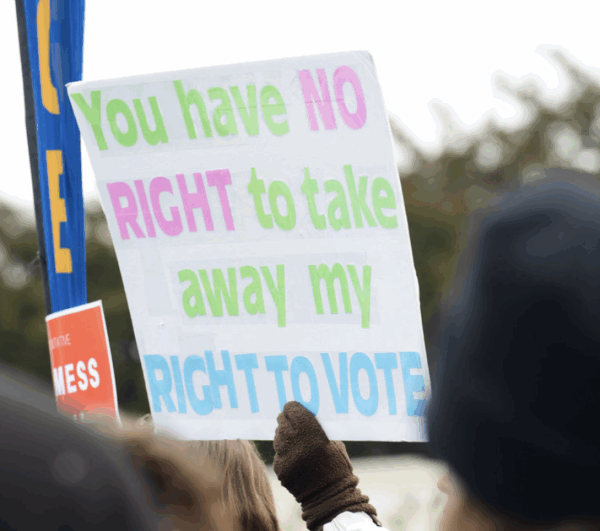
Virginia permanently disenfranchises all people with felony convictions unless the governor restores their rights. This lawsuit鈥攂rought by the 桃子视频of Virginia and co-counsel partners鈥攁rgues that the policy violates the Readmissions Act of 1870, which bars Virginia from denying the vote based on convictions that didn鈥檛 exist at common law in 1870. The state tried to dismiss the case by invoking sovereign immunity, but the courts rejected that argument. Now, the case moves forward with the potential to restore voting rights to thousands of Virginians.
Explore case
U.S. Supreme Court
Jun 2025
Fighting Voter Suppression
O'Bannon v. King
Virginia permanently disenfranchises all people with felony convictions unless the governor restores their rights. This lawsuit鈥攂rought by the 桃子视频of Virginia and co-counsel partners鈥攁rgues that the policy violates the Readmissions Act of 1870, which bars Virginia from denying the vote based on convictions that didn鈥檛 exist at common law in 1870. The state tried to dismiss the case by invoking sovereign immunity, but the courts rejected that argument. Now, the case moves forward with the potential to restore voting rights to thousands of Virginians.
Georgia Supreme Court
Jun 2025
Fighting Voter Suppression
Eternal Vigilance Action, Inc. v. Georgia
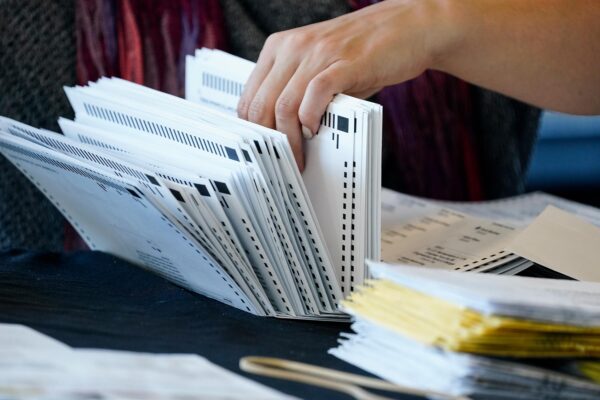
The 桃子视频and partner organizations intervened in this case to represent the rights of voters and voting-rights organizations in a case challenging a number of rules passed by the Georgia State Election Board. We challenged the rule requiring that the number of votes cast be hand counted at the polling place prior to the tabulation of votes. In a critical victory for Georgia voters, in June 2025, the Georgia Supreme Court upheld a lower court鈥檚 decision permanently blocking the rule requiring hand counting of ballots at polling places before tabulation 鈥� a process widely criticized for risking delays, ballot spoliation, and voter disenfranchisement.
Explore case
Georgia Supreme Court
Jun 2025
Fighting Voter Suppression
Eternal Vigilance Action, Inc. v. Georgia
The 桃子视频and partner organizations intervened in this case to represent the rights of voters and voting-rights organizations in a case challenging a number of rules passed by the Georgia State Election Board. We challenged the rule requiring that the number of votes cast be hand counted at the polling place prior to the tabulation of votes. In a critical victory for Georgia voters, in June 2025, the Georgia Supreme Court upheld a lower court鈥檚 decision permanently blocking the rule requiring hand counting of ballots at polling places before tabulation 鈥� a process widely criticized for risking delays, ballot spoliation, and voter disenfranchisement.
U.S. Supreme Court
Jun 2025
Fighting Voter Suppression
Republican National Committee v. Genser
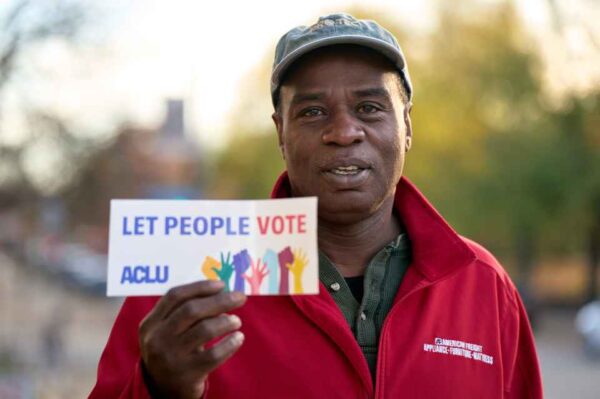
Voters in Butler County, Pennsylvania made a mistake in voting their mail ballots in the April 2024 primary election, forgetting to use the required secrecy envelope. Because their mail ballots could not be counted, they went to the polls in Election Day and voted provisional ballots. The County later determined that it would not count their provisional ballots, and the voter鈥檚 appealed, arguing that Pennsylvania law requires that when an eligible voter attempts to vote by mail but the mail ballot is rendered void due to some defect like lacking a secrecy envelope, the eligible voter may cast a provisional ballot and have that ballot counted notwithstanding the failed attempt to vote by mail.
Explore case
U.S. Supreme Court
Jun 2025
Fighting Voter Suppression
Republican National Committee v. Genser
Voters in Butler County, Pennsylvania made a mistake in voting their mail ballots in the April 2024 primary election, forgetting to use the required secrecy envelope. Because their mail ballots could not be counted, they went to the polls in Election Day and voted provisional ballots. The County later determined that it would not count their provisional ballots, and the voter鈥檚 appealed, arguing that Pennsylvania law requires that when an eligible voter attempts to vote by mail but the mail ballot is rendered void due to some defect like lacking a secrecy envelope, the eligible voter may cast a provisional ballot and have that ballot counted notwithstanding the failed attempt to vote by mail.