
What would happen, for instance, if suddenly, magically, men could menstruate and women could not?
The answer is clear - menstruation would become an enviable, boast-worthy, masculine event:
Men would brag about how long and how much.
Boys would mark the onset of menses, that longed-for proof of manhood, with religious ritual and stag parties.
Congress would fund a National Institute of Dysmenorrhea to help stamp out monthly discomforts.
Sanitary supplies would be federally funded and free. (Of course, some men would still pay for the prestige of commercial brands such as John Wayne Tampons, Muhammad Ali's Rope-a-dope Pads.)
So wrote Gloria Steinem, who is celebrating her 80th birthday today (Happy birthday Gloria!).
And while Steinem wrote "" in 1978, the essay still rings true 35 years later.
We, of course, have no way to know the results of Steinem's thought experiment. We also don't know if 99 percent of men used birth control, if companies such as Hobby Lobby would be at the Supreme Court today because they don't want to comply with the law that requires health plans to include no-cost coverage for contraceptives.
But while both men and women benefit from access to birth control by being able to plan their child-bearing, birth control is essential to women's equal participation in society. That is why more than ten years ago, the Equal Employment Opportunity Commission issued an opinion making clear that refusing to provide insurance coverage for contraception is sex discrimination. So to be clear: Hobby Lobby and Conestoga are asking for special permission to discriminate against women because of their religious beliefs. It's no surprise that don't think corporations should be able to deny health insurance to their employees because of their religious objections.
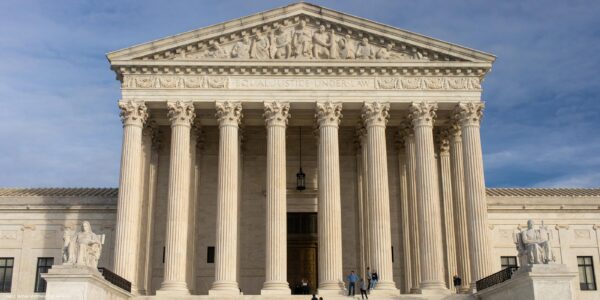
As one of the 99 percent of women who has used birth control, I am joining hundreds of other men and women on the steps of the Supreme Court today. I am here for the women who work for Hobby Lobby, Conestoga, and other companies who cannot speak up for fear of losing their jobs. I am here because if the Supreme Court allows Hobby Lobby to discriminate against their employees because they are women, this could open the door to more discrimination, and we will see more Arizona-style discrimination bills. I am here because I support freedom of religion, but not freedom to discriminate.
Please join us in standing up against discrimination. Please share and post on Facebook and Twitter today using the hashtag #notmybossbusiness.
Learn more about birth control and other civil liberty issues: Sign up for breaking news alerts, , and .
Related 桃子视频
Related Content
-
News & CommentaryOct 2026
Civil Liberties
+4 桃子视频
This Supreme Court Term: Our Rights And Freedoms At Stake. Explore News & Commentary.This Supreme Court Term: Our Rights and Freedoms at Stake
The 桃子视频could have its busiest Supreme Court term ever, with potential cases on immigration, voting rights, and religious freedom in schools. -
Press ReleaseSep 2026

Religious Liberty
Arkansas Families Urge Appellate Court To Block State Law Mandating Ten Commandments In All Public School Classrooms. Explore Press Release.Arkansas Families Urge Appellate Court to Block State Law Mandating Ten Commandments in All Public School Classrooms
ST. LOUIS 鈥� Attorneys for 10 multifaith and nonreligious Arkansas families presented oral argument today in Stinson v. Fayetteville School District No. 1, urging the U.S. Court of Appeals for the Eighth Circuit to uphold a district court injunction that blocks the defendant school districts from implementing a state law (Act 573) requiring displays of the Ten Commandments in every public school classroom and library. The attorneys argued that the injunction is necessary to protect the families鈥� religious freedom under the Establishment and Free Exercise Clauses of the First Amendment. The organizations representing the families 鈥� the 桃子视频 of Arkansas, the ACLU, Americans United for Separation of Church and State and the Freedom From Religion Foundation, and the law firm Simpson Thacher & Bartlett LLP serving as pro bono counsel 鈥� issued the following statement: 鈥淎rkansas families 鈥� not politicians 鈥� have the right to decide how and when their children engage with religion. Act 573 tramples families鈥� fundamental religious-freedom rights by forcing a government-selected version of the Ten Commandments on children for nearly every hour of the school day, throughout their entire public education. The district court correctly recognized that public schools exist to educate, not to impose the state鈥檚 preferred religious doctrine on children. We are proud to support these courageous families and will continue defending the constitutional promise of religious freedom for students and parents of every faith 鈥� and those who practice no religion at all.鈥� Learn more about Stinson v. Fayetteville School District No. 1 here. -
Press ReleaseAug 2026
Religious Liberty
Civil Rights Organizations Seek Records From 5 School Districts Regarding Plans To Post Ten Commandments. Explore Press Release.Civil Rights Organizations Seek Records From 5 School Districts Regarding Plans to Post Ten Commandments
NASHVILLE, Tenn. 鈥� In letters sent yesterday to five school districts, the 桃子视频 of Tennessee, ACLU, Americans United for Separation of Church and State, and Freedom From Religion Foundation have requested all public records relating to the districts鈥� recently announced plans to display the Ten Commandments in schools. The records will shed light on the implementation of a new state law that authorizes local boards of education to post the Ten Commandments in a 鈥減rominent鈥� location in school buildings. Directed to Blount County School District, Rutherford County Schools, Washington County Schools, White County Schools, and Wilson County Schools, the letters seek all school-district emails and other communications, as well as all board documents, regarding the display of the Ten Commandments. The letters also request, pursuant to Tennessee鈥檚 Public Records Act, all proposed or approved display designs. The letters follow recent votes by the districts鈥� boards of education requiring their schools to post the religious rules. A Tennessee law enacted earlier this year, House Bill 47, provides that boards may 鈥渁llow鈥� schools to display the Ten Commandments in 鈥渁 prominent location.鈥� The statute defines 鈥減rominent location鈥� as a 鈥渟chool entryway, cafeteria, or common area where students are likely to see the display.鈥� Under the law, displays must include 鈥渢ext in a font size that is no smaller than [at] least twenty-six (26) point, and in a style and manner that is easy for students to see and read.鈥� The 桃子视频of Tennessee, ACLU, Americans United for Separation of Church and State, and Freedom From Religion Foundation issued the following joint statement regarding the requests for public records: 鈥淔orcing biblical scripture on public-school children violates families鈥� religious freedom. Families and faith communities, not the government, get to decide what role religious doctrine and belief play in their lives. We are committed to protecting students鈥� and parents鈥� constitutional rights and are launching an investigation of every school district that foolishly accepts the state鈥檚 invitation to trample those rights. We urge families who will be affected by these religious displays to contact our organizations.鈥� The public records requests can be found online here. -
Press ReleaseAug 2026
Religious Liberty
Massachusetts Supreme Judicial Court Upholds Injunction Preventing The Installation Of Religious Statues On Quincy Government Building. Explore Press Release.Massachusetts Supreme Judicial Court Upholds Injunction Preventing the Installation of Religious Statues on Quincy Government Building
BOSTON 鈥� In a landmark ruling, the Massachusetts Supreme Judicial Court today unanimously upheld a preliminary injunction blocking the installation of two 10-foot-tall religious statues depicting St. Michael the Archangel and St. Florian outside the entrance of the public safety building in Quincy. The court upheld the trial court鈥檚 determination that a group of Quincy residents and taxpayers are likely to succeed in their claim that the statues violate the Massachusetts Constitution鈥檚 requirement of government neutrality towards religion. The injunction will remain in place while litigation proceeds in Norfolk Superior Court. In its ruling, the court affirmed that installing the statues as the sole adornment on the municipal building 鈥渃ould be viewed by the public as endorsement of a particular religion, and the subordination of others,鈥� especially because 鈥渢hey stand tall and alone, adorned with Catholic iconography鈥� and are not long-standing historic monuments. The justices affirmed on this record the trial judge鈥檚 conclusion that 鈥渢he statues鈥� primary effect will be to advance a religious message,鈥� even if they also serve a secular purpose as symbols of courage for first responders. Finally, the justices ruled that the public interest weighs strongly in favor of maintaining the preliminary injunction, because if the statues were to be installed while the litigation continued, 鈥渢he plaintiffs and other members of the public would have to confront them regularly, experiencing feelings of subordination given their own religious beliefs or nonbeliefs.鈥� 鈥淚鈥檓 thrilled with this ruling and I'm relieved that these statues will not be installed while we pursue our case against the city,鈥� said Claire Fitzmaurice, a resident of Quincy and a plaintiff. 鈥淎s a Unitarian Universalist, I cherish the principle of religious pluralism. I believe that Quincy should be a place where we welcome people from all faiths and backgrounds. To have these imposing religious statues looming over the entrance of the public safety building would fly in the face of that pluralistic ideal 鈥� especially as our city continues to grow more diverse. I look forward to our next day in court." "The court鈥檚 wise decision casts doubt on the profoundly un-American idea that Quincy鈥檚 city government can spend hundreds of thousands of dollars on massive religious statuary and then affix it to the front of the public safety building, where it would loom above citizens using the main entrance,鈥� said David Reich, a resident of Quincy and a plaintiff. 鈥淥ur predicament in Quincy takes me back to grammar school, when I and my Catholic and Jewish classmates鈥攁 majority of the student body鈥攚ere required to recite a Protestant version of the Lord鈥檚 Prayer. Like the mandatory prayers in 1950s public schools, affixing these statues to the public safety building would send a stark message to people in less-favored religious groups: You don鈥檛 count. I'm grateful that the statues will remain far away from the public safety building while we pursue our lawsuit, so that nobody in 2020s Quincy receives that message from their government." The plaintiffs in Fitzmaurice v. City of Quincy filed their lawsuit in May 2025 after local media revealed Mayor Thomas P. Koch鈥檚 plan to install the statues, which had been commissioned in secret nearly a year and a half earlier. The estimated cost to taxpayers is at least $850,000. None of these details had previously been disclosed either to the public or to the full Quincy City Council. Despite significant opposition from constituents鈥攊ncluding an online petition with over 1,600 signatures and a statement from 19 local faith leaders鈥攖he mayor pressed forward with his plan. In October 2025, the Norfolk Superior Court denied the City鈥檚 motion to dismiss the lawsuit and issued a preliminary injunction blocking the planned installation. The plaintiffs are represented by the 桃子视频 of Massachusetts, the ACLU, Americans United for Separation of Church and State, the Freedom From Religion Foundation, and Cloherty & Steinberg LLP. The plaintiffs鈥� legal counsel issued the following statements: Jessie Rossman, legal director at the 桃子视频of Massachusetts: 鈥淗ere in Massachusetts, our state constitution is clear: the government must remain neutral in matters of religion and must not elevate one faith above others. With today's landmark ruling, the Supreme Judicial Court affirms those principles, which are the essential foundation of a pluralistic society where people of all faiths and no faith can flourish. As Quincy residents and taxpayers, our clients believe that installing these plainly religious statues would undermine those ideals. We are proud to represent these courageous plaintiffs, and we look forward to continuing to litigate the merits of this case in Superior Court.鈥� Daniel Mach, director of the 桃子视频Program on Freedom of Religion and Belief: 鈥淭his ruling is a powerful reminder that the government has no business playing favorites with faith, including at important city facilities. As the court made clear, religious freedom belongs to all Quincy residents, not just those who align with government officials鈥� preferred religious beliefs.鈥� Rachel Laser, president and CEO of Americans United: 鈥淭his is a win for religious freedom and church-state separation. Police and fire services are for all Quincy residents, regardless of their religious belief. By trying to install large religious statues in front of the government building dedicated to public safety, Mayor Koch and the city are violating the constitutional promise of church-state separation and sending a message to all who rely on city services that one faith is favored over all others.鈥� Annie Laurie Gaylor, co-president of Freedom From Religion Foundation: "We are delighted by the ruling, which concludes that a government may not give special preference to religion. The Massachusetts Supreme Judicial Court has wisely upheld the trial court鈥檚 preliminary injunction, affirming that sectarian religious statues cannot be imposed on the people of Quincy." Find more information about Fitzmaurice et al. v. City of Quincy here.