New Orleans Police Continuing to Use Live Face Recognition Despite City Law

A troubling New Orleans face recognition program by a Washington Post investigation last year continues to operate despite violating a city law and a claim that it has been paused, and is being used in more problematic ways than first reported, according to emails obtained through an activist鈥檚 public records requests. If allowed to stand, this one-of-a-kind program would represent an alarming new expansion of how face recognition is used in America.
Face recognition is used by a number of police agencies around the nation, but almost always to discover the identity of an alleged perpetrator who appears in a photo. New Orleans police officers, however, have used 鈥� and appear to be continuing to use 鈥�live face recognition through an organization called Project NOLA. That means that they can do:
- Real time monitoring. The systems operators can set the system to issue instant alerts when someone on a watch list appears on some of the system鈥檚 5,000 camera system (the newer ones, which have face recognition functionality embedded within them).
- Search. The operators can also enter a name or image and pull up the video of every time the person appears in any of the recordings the system has made (Project NOLA says it retains them for 30 days).
- Tracking. The retroactive construction of a person鈥檚 movements across the city over time, which can be highly revealing of how they live their life.
- Relationship identification. Such a system also enables even more invasive social network analysis by tracking a person鈥檚 repeated co-appearances in a video with another person. There has been no reporting that Project NOLA is doing this in automated fashion, but it is one of the capabilities such a system can create, as we have discussed.
New Orleans police鈥檚 use of this system was secret for two years, the Post reported, and played a role in dozens of arrests, but those arrested were not informed of the unreliable technology鈥檚 use, and it violated a city law that permitted limited use of the technology in investigations but imposed guardrails and conditions, including a ban on its deployment as a 鈥渟urveillance tool.鈥�
Live face recognition has been activated in and , but, we think it鈥檚 fair to say, runs counter to American values and the views of Americans across the political spectrum. Few people want to live in communities where face recognition tags and tracks their every move, handing enormous new power to the government and inviting abusive uses against immigrants, activists, and anyone holding views disfavored by the powers that be. No one wants to live in a community where a simple computer error can send you tumbling into fraught and potentiallly dangerous police encounters. New Orleans police may think they鈥檙e only using face recognition against crime, but if and when the infrastructure is legitimized, it will inevitably be used in abusive ways.
Raising even more issues, Project NOLA is a private organization that:
- Has no contractual relationship with the NOPD.
- Cooperates closely but outside of official channels with individual New Orleans police officers, who use it through their personal phones or through calls, texts, and emails with Project NOLA staff.
- Received permission from the NOPD to install its .
- Has installed cameras on the premises of many private businesses, which are purchased by the businesses or donors, and then become part of this network.
- Is financed through unclear sources of funding, though much of it is provided by private business.
- Appears to be tightly controlled by one man, former NOPD officer Bryan Lagarde, who owns and personally operates the system and whose board of directors is made up of of Lagarde family members.
- Is immune from many of the checks and balances that we have evolved to limit the abuses of government agencies, such as open-records and privacy laws, because of its ostensible non-governmental status.
It is unacceptable for police officers to circumvent checks and balances and democratic accountability by using a private company to operate an arm鈥檚-length surveillance technology that lies well outside the bounds of public acceptance (as reflected in the New Orleans city council鈥檚 law, and by the council鈥檚 consideration but ultimate refusal to enact a new law endorsing Project NOLA after it was revealed). More broadly, in my conversations with police and other government officials I have seen a nationwide recognition that, despite our disagreements, live deployment of this technology on the streets is outside the bounds of public acceptance and legitimacy.
Continuing use
Earlier this year, we were contacted by a privacy researcher, , who has filed and obtained thousands of pages about this program from the New Orleans Police Department via open records requests.
Those records strongly suggest that face recognition is continuing in violation of New Orleans law. Emails obtained by Wollenweber confirm that at least as of November 2025 officers were photos to Laguarde to locate suspects using the Project NOLA face recognition system in violation of New Orleans鈥檚 law after the supposed 鈥減ause鈥� in the cooperation program. NOPD, Wollenweber told us, has become less responsive to open records requests. 鈥淭hey haven鈥檛 answered, I haven鈥檛 gotten any records past November. So they鈥檙e reluctant to share that. But the police department never ordered officers to stop using it 鈥� I checked that via public records.鈥� While we don鈥檛 have proof, it is reasonable to presume that, if use of this program was ongoing in November 2025, seven months after its supposed pause, that its use continues today in the absence of indications to the contrary.
That assumption is further supported by the fact that the NOPD won鈥檛 admit that face recognition use even took place. Wollenweber a complaint against the officers revealed to be sending photos to Project NOLA, but the police department ludicrously claimed that the requests didn鈥檛 constitute a 鈥渦se鈥� of facial recognition technology, and dismissed the complaints. This despite a from the city鈥檚 police chief Anne Kirkpatrick when the story broke last year that 鈥淲e鈥檙e going to do what the ordinance says and the policies say, and if we find that we鈥檙e outside of those things, we鈥檙e going to stop it, correct it and get within the boundaries of the ordinance.鈥�
In a November 5, 2025 , LaGarde tells a NOPD detective that 鈥淜irkpatrick visited my office yesterday, things went well, and I believe that we will soon be able to switch PN [Project NOLA] back on to the NOPD.鈥� It鈥檚 unclear what he means by 鈥渟witch PN back on,鈥� because in the very next sentence he tells the detective that he has fulfilled her request and 鈥渞eactivated your account.鈥�
Other findings from the documents include:
- Back-tracing. NOPD officers are using Project NOLA to and activities of suspects who are already in custody. One officer emailed the private organization that runs the system, 鈥淚 would like to get him on video prior to the robbery wearing a beige cross style bag.鈥� As Wollenweber , this enables fishing expeditions and warrantless retroactive searches for wrongdoing of people who have come to the attention of law enforcement (which could be not only due to evidence of wrongdoing but also via error or unlawful arrest at a demonstration).
- Terrible security. 鈥淭he security on the system is completely terrible,鈥� Wollenweber told us. He found it was sending videos of suspects over Google drive folders, many of which he recently verified were still accessible. And 鈥渕ost of the cameras have a ; the entire system to log in has no centralized identity management and they use and accounts. They had that for years.鈥�
- Irregular additions to watch list. 鈥淲e don't know who's on the watch list; there's no process for it, there's no auditing, there's no accountability. Hotlists are just whatever Bryan decides,鈥� Wollenweber said. For example, he said, when an arrestee appears to be a gang member, Project NOLA staffers have looked for their associates on social media and their pictures to the hot list. 鈥淭here鈥檚 no control there.鈥�
Violating twenty-five years of wise restraint
In 2001, not long after the 9/11 attacks, the Tampa Police Department deployed live face recognition on the streets of a busy neighborhood. This was a time when vendors were pushing the technology with wildly overblown promises that it would stop the next terrorist attack. Using Florida鈥檚 open records law, the 桃子视频obtained the police logs of hits generated by this program, revealing that the system hadn鈥檛 succeeded in identifying a single person from the police database and made many errors. In response, the department admitted that because of its ineffectiveness, the software had actually not been used for months.
News of this failure helped discredit face recognition technology, and the post-9/11 push for it dried up. Since then, despite improvements in the technology, we have not seen an effort to introduce live face recognition in any US city* 鈥� until Project NOLA. That system needs to be stopped lest its adoption become the first step in normalizing a nightmarish level of surveillance in American life.
* Before the New Orleans report, there had been that we learned had deployed small numbers of face recognition cameras for public surveillance 鈥� but in each case, the purchases appear to have been made by local officials who were under the mistaken impression that such uses were not out of the ordinary, and two of the three quickly backed off deploying the tech upon learning just how radical such a deployment would be. Earlier, the cities of had invested in similar technology but never turned it on, after realizing how much public opposition it would generate.
Related 桃子视频
Related Content
-
News & CommentaryAug 2026
Privacy & Technology
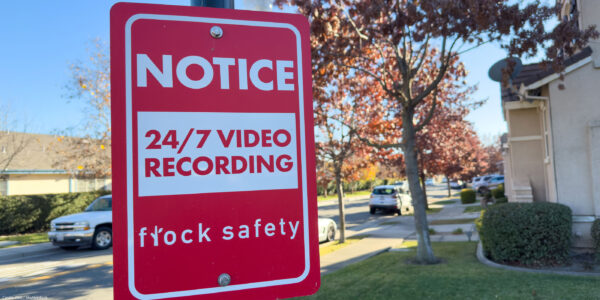
Despite 'new' Updates, Flock's Creepy Cameras Remain Major Civil Liberties Threat. Explore News & Commentary.Despite 'New' Updates, Flock's Creepy Cameras Remain Major Civil Liberties Threat
In response to Flock鈥檚 announcement of operational changes, the 桃子视频breaks down why many fall short. -
Press ReleaseAug 2026

Privacy & Technology
National Security
As Public Opposition To Flock Grows, Aclu Responds To Surveillance Company鈥檚 鈥渘ew鈥� Updates. Explore Press Release.As Public Opposition to Flock Grows, 桃子视频Responds to Surveillance Company鈥檚 鈥淣ew鈥� Updates
NEW YORK 鈥� Amid nationwide outcry against its automatic license plate readers, Flock Safety announced today that it will reduce its standard data retention policy and allegedly provide more control over local data searches, among other changes. However, according to 桃子视频鈥檚 new analysis, many of the proposed changes seem to be a thinly veiled PR attempt to counter communities鈥� genuine privacy concerns with its mass surveillance system with largely hollow security promises, rather than an earnest effort to address them. While the 桃子视频acknowledges one potentially positive development, most of the proposed changes stand little chance of making a positive difference for civil liberties. 鈥淭ransforming an exceptionally dangerous mass surveillance system into one that is fully protective of civil rights and civil liberties is a difficult, if not impossible task. That is even more the case with a company like Flock, whose nearly $1 billion in venture capitalist funding has locked it into an operational model that seeks to trade our privacy for massive profits,鈥� said Chad Marlow, senior policy counsel at ACLU. 鈥淕iven that Flock鈥檚 latest announcement still appears more focused on addressing a PR problem than the significant privacy and other harms its products create, we will continue to analyze the company鈥檚 proposals fairly and honestly. We just won鈥檛 be holding our breath.鈥� Flock operates more than 120,000 automatic license plate readers in at least 6,000 cities across the country, raising serious concerns around mass surveillance, data privacy, and how police and the government can use this data to go after immigrants, protestors, and others. Just this week, the Institute for Justice published a database with more than 100 incidents of ALPR abuse, including romantic stalking, wrongful stops and detentions, non-law enforcement use, and other types of misconduct. One of the changes announced is that Flock will decrease its standard data retention option to one week from 30 days. This seems positive at first blush, but as the ACLU鈥檚 breakdown explains, the devil will be in the details. For example, an exception to the data retention policy is something called 鈥淓vidence Mode, which is 鈥渨hen a search is tied to a case number, that data is preserved instead of aging out after 7 days.鈥� As the 桃子视频notes, 鈥淚f 鈥楨vidence Mode鈥� only retains hit result data that police determine may be evidence in an active investigation of a specific case, then the change may be a positive one. But if Evidence Mode triggers the retention of any ALPR data that is searched, then the new mode could indefinitely retain all the ALPR data Flock collects and shares nationally.鈥� Another 鈥渃hange鈥� the company is implementing is that local police will be able to decide what types of offenses other Flock customers can search their data for. The 桃子视频contends that this is not new. Flock has attempted this before, and the security measure failed because police were easily able to circumvent the system鈥檚 requirement that they input the purpose of their search. Finally, Flock announced that in response to the reports of police abuse, they will now require reasons for a search, and that they plan to universally roll out its audit assistance tool to detect police misuse. Flock鈥檚 announcement fails to note how easily users have circumvented 鈥渟earch reason鈥� security measures in the past or how its new policy improves the quality of the feature. And while providing 鈥淎udit Assistance鈥� to all departments makes sense, the 桃子视频notes that there is no evidence that the tool works consistently to address what the Washington Post observed is a growing pattern of police officers turning Flock into a personal stalking tool. To determine the efficacy of this tool, Flock needs to have it analyzed by an independent evaluator. Until then, the 桃子视频says, 鈥渨e don鈥檛 know if the tool is a real security measure or just window dressing.鈥� Dozens of communities across the country have successfully convinced their leaders to cancel Flock contracts, suspend their ALPR programs, or deactivate the cameras, with many more cities considering new legislation to rein in this mass warrantless surveillance tech. In June, the 桃子视频launched its 鈥淕et the Flock Out鈥� campaign to bring together the litigation, advocacy, and legislative efforts of 桃子视频affiliates in each state, show how communities across the country are fighting back against the spread of Flock and other license plate readers, and lay out how lawmakers at the local, state, and federal level can best protect our rights. -
News & CommentaryAug 2026
Privacy & Technology
Immigrants' Rights
Ice Agents To Wear Body Cameras But The Fix Is In. Explore News & Commentary.ICE Agents to Wear Body Cameras But the Fix is In
The technology appears unlikely to constrain the immigration agencies; much more sweeping reforms are needed -
VirginiaAug 2026

Privacy & Technology
National Security
In Re: Application Of The United States Of America For An Order Pursuant To 18 U.s.c. 搂 2703(d). Explore Case.In Re: Application of The United States Of America for an Order Pursuant To 18 U.S.C. 搂 2703(d)