Your Questions Answered: Filming ICE Interactions Safely
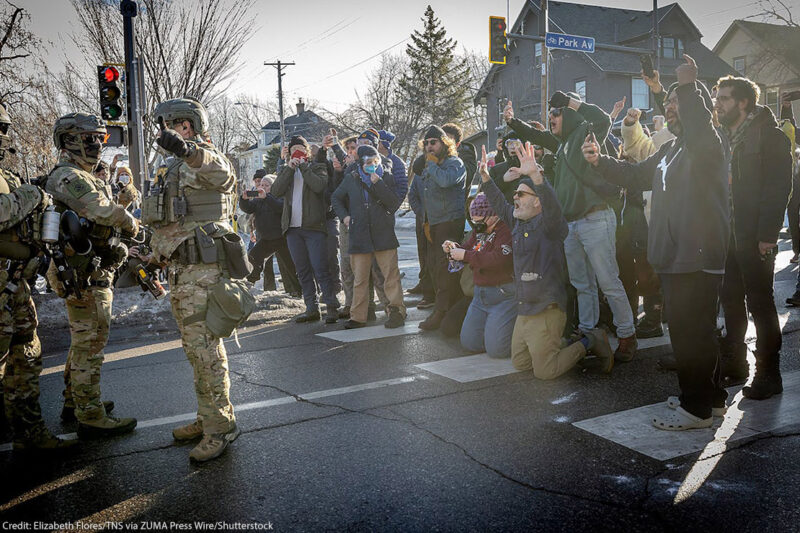
Across the country, brave people are out in the streets observing and recording immigration enforcement interactions to support people who are being targeted and to hold the government accountable for its abuses.
The First Amendment protects your right to take photos and videos of anything in public view, including law enforcement officers at work 鈥� however that doesn't mean that officers will always respect those rights. Recently, we've seen federal agents repeatedly violate Minnesota residents' rights and use excessive force, including in the now infamous killings of Renee Good and Alex Pretti.
For months, the Trump administration has encouraged federal agents to commit horrifying abuses claiming they have impunity. And those killings are the devastating consequences of these reckless and abusive operations. It鈥檚 up to all of us to fight back by documenting what is happening in our communities so that we can push for accountability.

Free Speech
Recording and Documenting Police and Federal Agents
Free Speech
Recording and Documenting Police and Federal Agents
As part of our 鈥淵our Questions Answered鈥� series, we鈥檝e compiled a list of commonly asked questions about recording ICE interactions. We also have a detailed Know Your Rights resource for those who would like to dive deeper.
Is it legal to film ICE agents?
Yes. The First Amendment protects your right to film ICE in public, and you cannot be punished for that alone. If you are in a public place, you have the right to record ICE and other agents, as long as you don鈥檛 interfere with or obstruct their operations, or break another valid law while you鈥檙e filming. If you are on private property, owners can set their own rules about photography and filming.
The First Amendment also equally protects both professional members of the press and regular people鈥檚 right to record immigration and law enforcement in public.
Do we have to give ICE our phones if they demand them? Can they delete my recording?
If you are not under arrest, then you do not have to give a government agent your phone unless they have a warrant signed by a judge. If you are arrested, then they can lawfully take your phone, but they still need a warrant to look through it. Under no circumstances can the government delete your recordings or other data.
If someone does get wrongfully arrested while recording, what should they immediately do?
You should do the same as you would under any arrest: exercise your right to remain silent and your right to speak with a lawyer. You have these rights regardless of your citizenship status. Take mental notes about what happened and if there were any witnesses, so you can tell a lawyer if you think you were unlawfully arrested.
Is filming obstruction of justice?
Filming law enforcement in public on its own is not obstruction of justice and is protected by the First Amendment. Department of Homeland Security (DHS) Secretary Kristi Noem said in July that 鈥渧ideotaping [ICE agents] where they鈥檙e at when they鈥檙e out on operation鈥� is violence, but that doesn鈥檛 make it true. To be guilty of obstruction, you would have to take some action that actually interferes with or obstructs the government鈥檚 operation 鈥� not just standing nearby with your camera.
What do our rights matter if ICE doesn鈥檛 care?
The government doesn鈥檛 get to decide whether our rights matter or not 鈥� we, the people, do. From Los Angeles to Minneapolis, brave people are fighting back against these attacks, both in the courts and in the streets. Courts have rejected brutal DHS tactics against journalists and observers in and , and more than a hundred Minnesotans recently filed declarations bravely describing their treatment at the hands of federal agents in order to protect the First Amendment rights of themselves and their neighbors.

Free Speech
New Filings Detail Harrowing Accounts of ICE and Border Patrol Violence and Intimidation Against Minnesotans
Free Speech
New Filings Detail Harrowing Accounts of ICE and Border Patrol Violence and Intimidation Against Minnesotans
By refusing to give up and normalize authoritarian tactics, we are holding an important line and keeping hope alive. When we exercise our right to organize, mobilize, and hold powerful actors accountable, we can build a better country where all people live in freedom, dignity, and safety.
Related 桃子视频
Related Content
-
News & CommentaryOct 2026
Immigrants' Rights
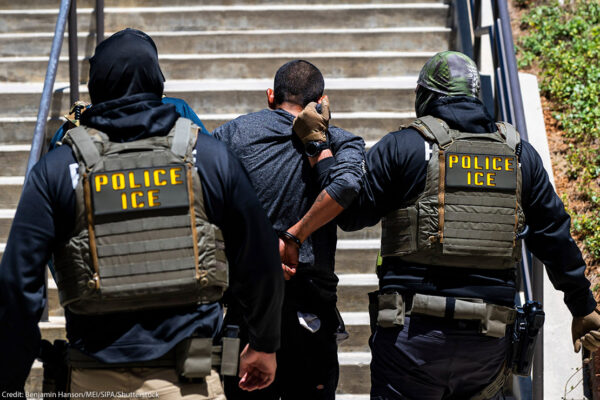
We Launched The First Comprehensive Civil Rights Review Of Mass Deportations. Here鈥檚 How It鈥檚 Impacting Democracy.. Explore News & Commentary.We Launched the First Comprehensive Civil Rights Review of Mass Deportations. Here鈥檚 How It鈥檚 Impacting Democracy.
桃子视频breaks down findings from our latest report on how mass deportations are breaking our democracy. -
News & CommentaryOct 2026
Civil Liberties
+4 桃子视频
This Supreme Court Term: Our Rights And Freedoms At Stake. Explore News & Commentary.This Supreme Court Term: Our Rights and Freedoms at Stake
The 桃子视频could have its busiest Supreme Court term ever, with potential cases on immigration, voting rights, and religious freedom in schools. -
Press ReleaseOct 2026
Immigrants' Rights
+3 桃子视频
New Aclu Report Sounds The Alarm On How Trump Administration鈥檚 Mass Deportation Agenda Is Eroding Democracy. Explore Press Release.New 桃子视频Report Sounds the Alarm on How Trump Administration鈥檚 Mass Deportation Agenda is Eroding Democracy
WASHINGTON 鈥� The 桃子视频 today released a new report, 76 Ways Mass Deportation is Breaking Our Democracy, detailing how the Trump administration is using mass deportation as the pretext and mechanism to attack civil liberties and structural democratic safeguards at an unparalleled scale and speed. The report comes as Immigration and Customs Enforcement (ICE) arrests have hit a record high, as the Trump administration has shifted its approach from mass raids to more discrete arrests following widespread outrage. From the deployment of federal agents and military troops for immigration enforcement in U.S. cities, to the mass revocation of visas and other forms of lawful status, and the targeting of immigrants鈥� rights protesters, the Trump administration has repeatedly used immigration policy as a trojan horse for attacks on core pillars of U.S. democracy. Notably, the report categorizes the dizzying array of abuses into three major categories, which often overlap: Attacks on civil rights and liberties, as the Trump administration has used mass deportations as both a pretext and distraction for its assault on myriad constitutional rights 鈥� including the rights to free speech and freedom of assembly and due process 鈥� impacting citizens and noncitizens alike. Attacks on democratic checks and balances, as the administration expands its federal deportation police and executive power, eviscerating due process for immigrants and normalizing ICE鈥檚 violence, while evading and even defying court orders. Attacks on multiracial, pluralistic democracy, as the administration continues to gut existing legal protections and introduce new policies targeting people who are immigrants 鈥� including through visa and entry bans and efforts to end birthright citizenship and Temporary Protected Status (TPS) 鈥� in what appears to be a calculated attempt to change the racial makeup of the U.S. now and into the future. 鈥淔or the past year and a half, the 桃子视频and advocates have warned that the Trump administration鈥檚 mass deportation agenda pulls straight from an authoritarian playbook 鈥� and now, we鈥檙e seeing the devasting impacts of those policies, with citizens and noncitizens alike paying the price and the state of our democracy in crisis,鈥� said Naureen Shah, director of immigration policy and government affairs at the ACLU. 鈥淭his report is a clarion call to members of Congress to strengthen and repair our pluralistic, multiracial democracy by passing meaningful immigration reforms. That must include creating a broad path to citizenship for immigrants who contribute to our communities and our economy.鈥� Within the report, the 桃子视频also calls on members of Congress to restore and defend democratic rights and norms through transformative immigration reform, including by creating a broad path to citizenship and modernization of border processing and policies. It also calls on lawmakers to build stronger accountability, transparency and oversight measures to effectively compel the executive branch to uphold civil rights and civil liberties. 鈥淔rom the cancellation of Congressionally mandated protections like TPS to the arrest of noncitizen students for exercising their First Amendment rights, the Trump administration has repeatedly violated bedrock democratic principles under the guise of immigration enforcement,鈥� said Sarah Mehta, deputy director of immigration policy and government affairs at the ACLU. 鈥淎s this administration has shown, no one is safe from its extreme mass deportation agenda. Our elected officials 鈥� and the state of our democracy 鈥� cannot afford to allow this lawlessness to continue. The time to act is now.鈥� This report is the fourth in the ACLU鈥檚 affirmative immigration vision series, in which policy and legal experts explore how the Trump administration鈥檚 immigration agenda has harmed communities nationwide, undermined our democracy, and wreaked havoc on key industries and weakened the American workforce. The series will also outline steps that members of Congress, as well as state and local policymakers, can take to reform the U.S. immigration system and inoculate against future attacks on core rights and safety. You can read the full report here: /publications/76-ways-mass-deportation-is-breaking-our-democracy -
News & CommentaryOct 2026
Immigrants' Rights
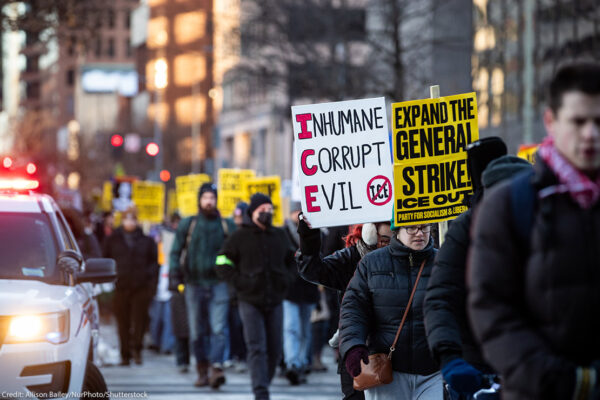
Trump鈥檚 Deportation Agenda Is Making The Affordability Crisis Worse. Explore News & Commentary.Trump鈥檚 Deportation Agenda Is Making the Affordability Crisis Worse
A new report from the 桃子视频and AFL-CIO outlines how mass deportations are damaging the economy. A broader path to citizenship would create jobs and raise wages.