Supreme Court Term 2025-2026

We’re breaking down the cases we've asked the court to consider this term.
All Cases

9 Supreme Court Cases during the 2025 Term

US v. Hemani
U.S. Supreme Court
Feb 2026

Criminal Law Reform

US v. Hemani

Is a federal criminal statute, 18 U.S.C. § 922(g)(3), which makes it a felony for an “unlawful user” of a controlled substance to possess a firearm, constitutional when it is used to prosecute a person who is a marijuana user and who keeps a gun safely secured at home for self-defense?
Explore case
Us V. Hemani. Explore Case.
U.S. Supreme Court
Feb 2026
US v. Hemani

Criminal Law Reform

US v. Hemani
Is a federal criminal statute, 18 U.S.C. § 922(g)(3), which makes it a felony for an “unlawful user” of a controlled substance to possess a firearm, constitutional when it is used to prosecute a person who is a marijuana user and who keeps a gun safely secured at home for self-defense?
Us V. Hemani. Explore Case.
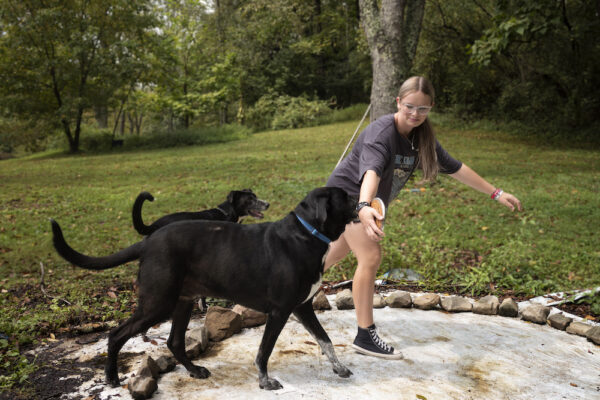
A photo of Becky Pepper-Jackon.
U.S. Supreme Court
Feb 2026

LGBTQ Rights

West Virginia v. B.P.J.

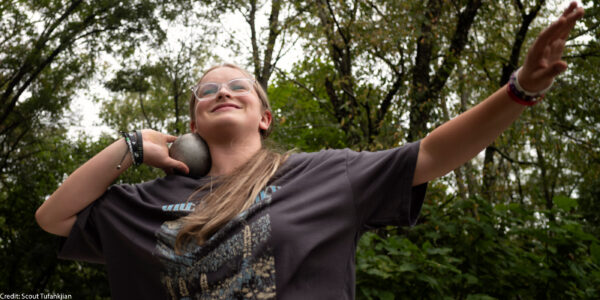
Becky is a student in West Virginia who is starting high school. Three years ago, as Becky was preparing to begin middle school, West Virginia passed a law categorically banning transgender girls from participating in all school sports. Becky loves being part of a team and wanted to be able to participate in cross-country and track and field with her friends. She sued, arguing that West Virginia's law violated the Constitution and Title IX as applied to her, especially because she has received medication from the onset of puberty and has never experienced any physiological changes associated with puberty for boys. As a result of an injunction issued by the lower courts, she has been able to participate in middle school cross-country and track and field for the past three years. Becky and her mother are represented by the ACLU, the Ƶof West Virginia, Lambda Legal and Cooley LLP.
Explore case
West Virginia V. B.p.j.. Explore Case.
U.S. Supreme Court
Feb 2026
A photo of Becky Pepper-Jackon.

LGBTQ Rights

West Virginia v. B.P.J.

Becky is a student in West Virginia who is starting high school. Three years ago, as Becky was preparing to begin middle school, West Virginia passed a law categorically banning transgender girls from participating in all school sports. Becky loves being part of a team and wanted to be able to participate in cross-country and track and field with her friends. She sued, arguing that West Virginia's law violated the Constitution and Title IX as applied to her, especially because she has received medication from the onset of puberty and has never experienced any physiological changes associated with puberty for boys. As a result of an injunction issued by the lower courts, she has been able to participate in middle school cross-country and track and field for the past three years. Becky and her mother are represented by the ACLU, the Ƶof West Virginia, Lambda Legal and Cooley LLP.
West Virginia V. B.p.j.. Explore Case.
TX
U.S. Supreme Court
Jan 2026

Voting Rights

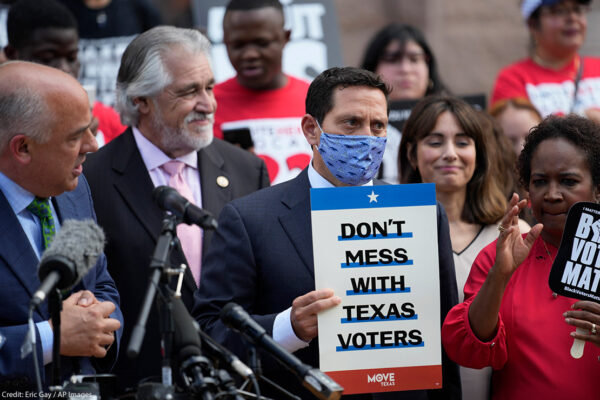
OCA-Greater Houston v. Paxton

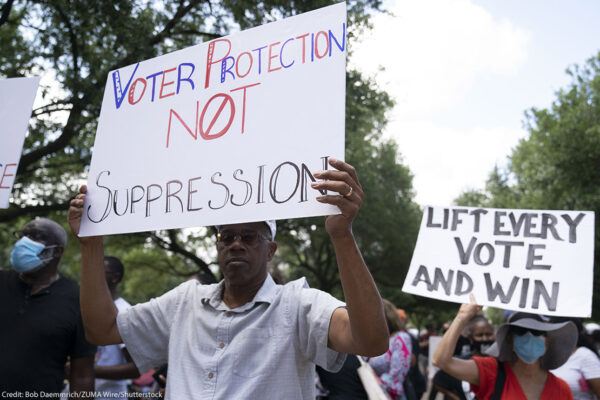
Texas has growing Hispanic and Black populations that helped propel record voter turnout in the November 2020 election. The Texas Legislature responded to this increased civic participation with an omnibus election bill titled Senate Bill 1—SB 1 for short—that targeted election practices that made voting more accessible to traditionally marginalized voters like voters of color, voters with disabilities, and voters with limited English proficiency. Since 2021, SB 1 has resulted in tens of thousands of lawful votes being rejected, and it remains a threat to democracy in Texas.
Explore case
Oca-greater Houston V. Paxton. Explore Case.
U.S. Supreme Court
Jan 2026
TX

Voting Rights

OCA-Greater Houston v. Paxton

Texas has growing Hispanic and Black populations that helped propel record voter turnout in the November 2020 election. The Texas Legislature responded to this increased civic participation with an omnibus election bill titled Senate Bill 1—SB 1 for short—that targeted election practices that made voting more accessible to traditionally marginalized voters like voters of color, voters with disabilities, and voters with limited English proficiency. Since 2021, SB 1 has resulted in tens of thousands of lawful votes being rejected, and it remains a threat to democracy in Texas.
Oca-greater Houston V. Paxton. Explore Case.
Little v. Hecox
U.S. Supreme Court
Jan 2026

LGBTQ Rights

Little v. Hecox

Lindsay is a college student at Boise State University. She wants to run on the track team so she can form friendships with other girls. A new law in Idaho would ban her from doing so because she is transgender.
Explore case
Little V. Hecox. Explore Case.
U.S. Supreme Court
Jan 2026
Little v. Hecox

LGBTQ Rights

Little v. Hecox

Lindsay is a college student at Boise State University. She wants to run on the track team so she can form friendships with other girls. A new law in Idaho would ban her from doing so because she is transgender.
Little V. Hecox. Explore Case.
vote sign
U.S. Supreme Court
Jan 2026

Voting Rights

Watson v. Republican National Committee (Amicus)

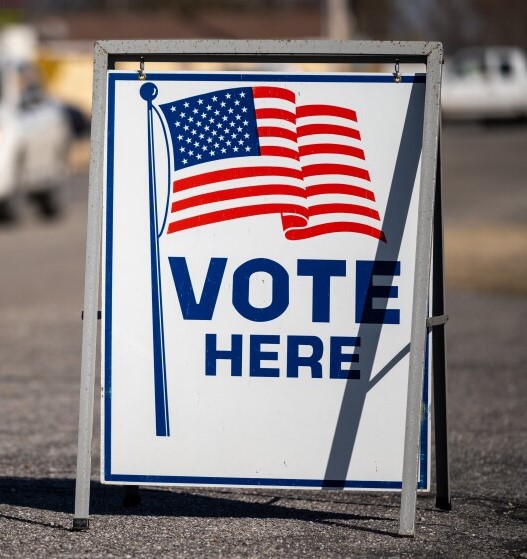
In 2020, in a nearly unanimous bipartisan vote, Mississippi joined eighteen other states in accepting mail ballots postmarked by Election Day that arrived after Election Day (in Mississippi’s case, up to five business days). This lawsuit by partisan actors seeks to disenfranchise these voters whose ballot is mailed by Election Day but—through no fault of their own—does not arrive until afterwards. In Mississippi, this harm will fall disproportionately on voters with disabilities, older voters, and other communities that rely upon absentee voting. Twisting the words and meaning of Congress, the RNC argues that three longstanding federal laws that set a uniform election day for federal races require that ballot may only be counted if they are received by election officials by Election Day. If accepted, this radical argument would not only disenfranchise thousands upon thousands of voters in Mississippi and eighteen other states, but also upend election administration in every state.
Explore case
Watson V. Republican National Committee (amicus). Explore Case.
U.S. Supreme Court
Jan 2026
vote sign

Voting Rights

Watson v. Republican National Committee (Amicus)

In 2020, in a nearly unanimous bipartisan vote, Mississippi joined eighteen other states in accepting mail ballots postmarked by Election Day that arrived after Election Day (in Mississippi’s case, up to five business days). This lawsuit by partisan actors seeks to disenfranchise these voters whose ballot is mailed by Election Day but—through no fault of their own—does not arrive until afterwards. In Mississippi, this harm will fall disproportionately on voters with disabilities, older voters, and other communities that rely upon absentee voting. Twisting the words and meaning of Congress, the RNC argues that three longstanding federal laws that set a uniform election day for federal races require that ballot may only be counted if they are received by election officials by Election Day. If accepted, this radical argument would not only disenfranchise thousands upon thousands of voters in Mississippi and eighteen other states, but also upend election administration in every state.
Watson V. Republican National Committee (amicus). Explore Case.
1
2

How Do Terms Work?

Between October and late June or early July the Supreme Court is “in session,” meaning it hears oral arguments, issues written decisions, and decides whether to take additional cases.

Submitting petitions

Our legal team at the Ƶfiles a cert petition to the U.S. Supreme Court, a type of petition that usually argues that a lower court has incorrectly decided an important question of law that violates civil rights and should be fixed to prevent similar confusion in similar cases.

term starts

U.S. Supreme Court decides to take a case

On average, the Court considers about 7,000 ‐ 8,000 petitions each term and accepts about 80 for oral argument.

Oral arguments

This is the period where the U.S. Supreme Court listens to our case in court.

U.S. Supreme Court makes final decisions

While the U.S. Supreme Court makes decisions throughout the term, many are released right before the term ends. If a decision doesn't go in our favor, we fight back!