Featured

U.S. Supreme Court
Apr 2024
Idaho and Moyle, et al. v. United States
Reproductive Freedom

Idaho and Moyle, et al. v. United States

Idaho and Moyle, et al. v. United States was appealed to the U.S. Supreme Court by Idaho politicians seeking to disregard a federal statute — the Emergency Medical Treatment and Labor Act (EMTALA) — and put doctors in jail for providing pregnant patients necessary emergency medical care. The Supreme Court heard oral arguments on this case on April 24, 2024. The Court’s ultimate decision will impact access to this essential care across the country.
Idaho And Moyle, Et Al. V. United States. Explore Case.
U.S. Supreme Court
Dec 2023
Outside Federal Bureau of Investigation Headquarters

National Security

FBI v. Fikre

Whether the government can overcome the voluntary cessation exception to mootness by removing an individual from the No Fly List when the government has not repudiated its decision to place him on the List and remains free to return him to the List for the same reasons and using the same procedures he alleges were unlawful.
Fbi V. Fikre. Explore Case.
U.S. Supreme Court
Sep 2023
Muldrow v. City of St. Louis

Racial Justice

Muldrow v. City of St. Louis

Do employees claiming that they have been denied a transfer because of their race have to demonstrate in addition that the transfer caused a significant material disadvantage?
Muldrow V. City Of St. Louis. Explore Case.
U.S. Supreme Court
Sep 2023
Molina v. Book

Free Speech

Molina v. Book

Whether police officers violated clearly established First Amendment rights when they tear-gassed plaintiffs for serving as legal observers in a public protest.
Molina V. Book. Explore Case.
U.S. Supreme Court
Sep 2023
McElrath v. Georgia

Criminal Law Reform

McElrath v. Georgia

Does the Double Jeopardy Clause bar an appellate court from reviewing and setting aside a jury’s verdicts of acquittal on the ground that the verdict is inconsistent with the jury’s verdict on other charges?
Mcelrath V. Georgia. Explore Case.
U.S. Supreme Court
Sep 2023
United States v. Rahimi

Women's Rights

Racial Justice

United States v. Rahimi

Whether 18 U.S.C. § 922(g)(8), which prohibits the possession of firearms by persons subject to domestic-violence restraining orders, violates the Second Amendment on its face.
United States V. Rahimi. Explore Case.
U.S. Supreme Court
Aug 2023
O’Connor-Ratcliff v. Garnier and Lindke v. Freed

Free Speech

O’Connor-Ratcliff v. Garnier and Lindke v. Freed

The ACLU, the Ƶof Northern California, and the Ƶof Southern California filed amicus briefs in support of everyday people fighting for government transparency and accountability in two cases set for review by the U.S. Supreme Court this Term: O’Connor-Ratcliff v. Garnier and Lindke v. Freed.
O’connor-ratcliff V. Garnier And Lindke V. Freed. Explore Case.
U.S. Supreme Court
Aug 2023
Acheson Hotels, LLC v. Deborah Laufer

Disability Rights

Acheson Hotels, LLC v. Deborah Laufer

Whether a “tester” has standing to challenge a place of public accommodation’s illegal failure to provide disability accessibility information on its website, even if she does not intend to visit that place of public accommodation.
Acheson Hotels, Llc V. Deborah Laufer. Explore Case.
U.S. Supreme Court
Jun 2023
Danco Laboratories, LLC, v. Alliance for Hippocratic Medicine; U.S. FDA v. Alliance for Hippocratic Medicine

Reproductive Freedom

Danco Laboratories, LLC, v. Alliance for Hippocratic Medicine; U.S. FDA v. Alliance for Hippocratic Medicine

The Ƶ joined over 200 reproductive health, rights, and justice organizations in an amicus brief to the Supreme Court in support of an emergency request to stay a decision issued by the Fifth Circuit Court of Appeals that severely restricted the use of mifepristone — a medication used in most abortions in this country — and threatened the innovation of new drugs and the ability of Americans to access lifesaving drugs.
Danco Laboratories, Llc, V. Alliance For Hippocratic Medicine; U.s. Fda V. Alliance For Hippocratic Medicine. Explore Case.

All Cases

13 Supreme Court Cases during the 2023 Term

Free Speech Coalition, Inc. v. Paxton
U.S. Supreme Court
Jul 2025

Free Speech

LGBTQ Rights

Free Speech Coalition, Inc. v. Paxton

Whether a content-based regulation that burdens adults’ access to protected speech has to be merely reasonable to satisfy the First Amendment because it was passed in the name of protecting children from sexual material online.
Explore case
Free Speech Coalition, Inc. V. Paxton. Explore Case.
U.S. Supreme Court
Jul 2025
Free Speech Coalition, Inc. v. Paxton

Free Speech

LGBTQ Rights

Free Speech Coalition, Inc. v. Paxton
Whether a content-based regulation that burdens adults’ access to protected speech has to be merely reasonable to satisfy the First Amendment because it was passed in the name of protecting children from sexual material online.
Free Speech Coalition, Inc. V. Paxton. Explore Case.
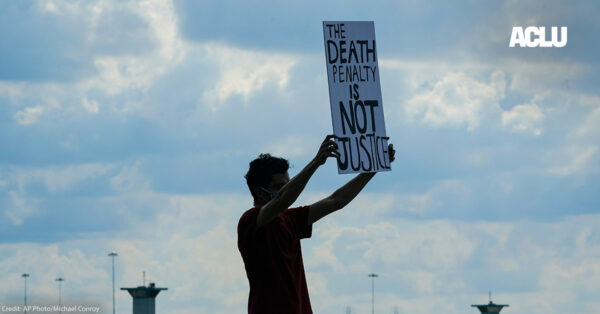
A man holding a sign that says "Death Penalty is Not Justice."
U.S. Supreme Court
Jul 2025

Capital Punishment

Tabler v. Lumpkin

In Tabler v. Lumpkin, the Ƶrepresented a Texas death row prisoner whose lawyers refused to represent him at a hearing to determine his capacity to decide whether to give up his state post-conviction appeals, leaving him effectively unrepresented at that hearing. Our petition asked the Supreme Court to review Richard Tabler’s case and to hold that when a defendant’s lawyers abandon him, his waiver of further appeals should not bar his access to federal habeas corpus review of the constitutionality of his conviction.
Explore case
Tabler V. Lumpkin. Explore Case.
U.S. Supreme Court
Jul 2025
A man holding a sign that says "Death Penalty is Not Justice."

Capital Punishment

Tabler v. Lumpkin

In Tabler v. Lumpkin, the Ƶrepresented a Texas death row prisoner whose lawyers refused to represent him at a hearing to determine his capacity to decide whether to give up his state post-conviction appeals, leaving him effectively unrepresented at that hearing. Our petition asked the Supreme Court to review Richard Tabler’s case and to hold that when a defendant’s lawyers abandon him, his waiver of further appeals should not bar his access to federal habeas corpus review of the constitutionality of his conviction.
Tabler V. Lumpkin. Explore Case.
Smith v. Arizona
U.S. Supreme Court
Aug 2024

Criminal Law Reform

Smith v. Arizona

Whether the Sixth Amendment’s confrontation right permits the prosecution in a criminal trial to present testimonial statements of a non-testifying laboratory analyst through an expert who relies on the non-testifying expert’s statement to reach their conclusions.
Explore case
Smith V. Arizona. Explore Case.
U.S. Supreme Court
Aug 2024
Smith v. Arizona

Criminal Law Reform

Smith v. Arizona
Whether the Sixth Amendment’s confrontation right permits the prosecution in a criminal trial to present testimonial statements of a non-testifying laboratory analyst through an expert who relies on the non-testifying expert’s statement to reach their conclusions.
Smith V. Arizona. Explore Case.
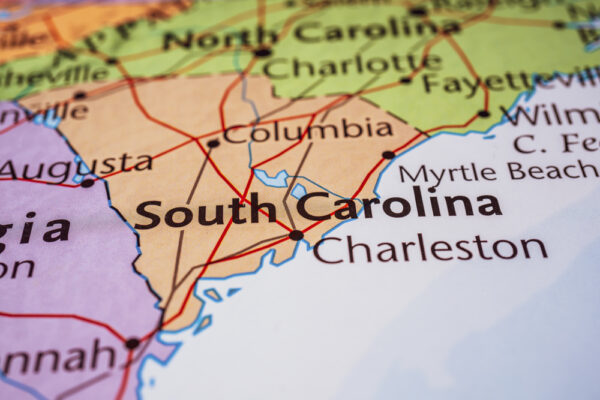
South Carolina
U.S. Supreme Court
Jul 2024

Voting Rights

Alexander v. South Carolina State Conference of the NAACP (Congressional Map Challenge)

South Carolina unlawfully assigned voters to congressional districts based on their race and intentionally discriminated against Black voters in violation of the Equal Protection Clause.
Explore case
Alexander V. South Carolina State Conference Of The Naacp (congressional Map Challenge). Explore Case.
U.S. Supreme Court
Jul 2024
South Carolina

Voting Rights

Alexander v. South Carolina State Conference of the NAACP (Congressional Map Challenge)

South Carolina unlawfully assigned voters to congressional districts based on their race and intentionally discriminated against Black voters in violation of the Equal Protection Clause.
Alexander V. South Carolina State Conference Of The Naacp (congressional Map Challenge). Explore Case.
A man holding a sign that says "Death Penalty is Not Justice."
U.S. Supreme Court
Jul 2024

Capital Punishment

Galloway v. Mississippi

In Galloway v. Mississippi, the Ƶrepresents a man on Mississippi’s death row whose trial attorneys relied on a mere twenty-two-page presentation in support of a life sentence, without first conducting the background investigation that would have enabled them to make informed decisions about what evidence to present. A constitutionally adequate investigation would have uncovered voluminous mitigating evidence that could have caused the jury to decide for life instead of death. The Mississippi Supreme Court rejected Mr. Galloway’s claim by speculating that trial counsel had an alternative “strategy” that precluded their doing a full presentation of the abuse he suffered as a child and his mental disabilities—even though Mr. Galloway’s lawyers asserted no such strategic judgment.
Explore case
Galloway V. Mississippi. Explore Case.
U.S. Supreme Court
Jul 2024
A man holding a sign that says "Death Penalty is Not Justice."

Capital Punishment

Galloway v. Mississippi

In Galloway v. Mississippi, the Ƶrepresents a man on Mississippi’s death row whose trial attorneys relied on a mere twenty-two-page presentation in support of a life sentence, without first conducting the background investigation that would have enabled them to make informed decisions about what evidence to present. A constitutionally adequate investigation would have uncovered voluminous mitigating evidence that could have caused the jury to decide for life instead of death. The Mississippi Supreme Court rejected Mr. Galloway’s claim by speculating that trial counsel had an alternative “strategy” that precluded their doing a full presentation of the abuse he suffered as a child and his mental disabilities—even though Mr. Galloway’s lawyers asserted no such strategic judgment.
Galloway V. Mississippi. Explore Case.
1
23

How Do Terms Work?

Between October and late June or early July the Supreme Court is “in session,” meaning it hears oral arguments, issues written decisions, and decides whether to take additional cases.

Submitting petitions

Our legal team at the Ƶfiles a cert petition to the U.S. Supreme Court, a type of petition that usually argues that a lower court has incorrectly decided an important question of law that violates civil rights and should be fixed to prevent similar confusion in similar cases.

term starts

U.S. Supreme Court decides to take a case

On average, the Court considers about 7,000 ‐ 8,000 petitions each term and accepts about 80 for oral argument.

Oral arguments

This is the period where the U.S. Supreme Court listens to our case in court.

U.S. Supreme Court makes final decisions

While the U.S. Supreme Court makes decisions throughout the term, many are released right before the term ends. If a decision doesn't go in our favor, we fight back!