Featured

U.S. Supreme Court
Mar 2019
Nielsen v. Preap

Immigrants' Rights

Nielsen v. Preap

Whether the government can require that certain people are detained for the duration of their deportation proceedings — without a hearing — because they have past criminal records.
Nielsen V. Preap. Explore Case.

All Cases

15 Supreme Court Cases during the 2018 Term
Census Agent
U.S. Supreme Court
May 2020

Immigrants' Rights

Voting Rights

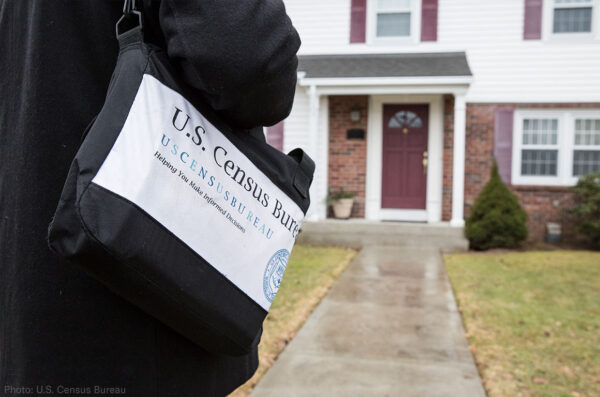
Department of Commerce v. New York

Whether the Secretary of Commerce’s decision to add a citizenship question to the Census was arbitrary and capricious and contrary to law.
Explore case
Department Of Commerce V. New York. Explore Case.
U.S. Supreme Court
May 2020
Census Agent

Immigrants' Rights

Voting Rights

Department of Commerce v. New York

Whether the Secretary of Commerce’s decision to add a citizenship question to the Census was arbitrary and capricious and contrary to law.
Department Of Commerce V. New York. Explore Case.
Iancu v. Brunetti
U.S. Supreme Court
Jun 2019

Free Speech

Iancu v. Brunetti

Whether the prohibition on the federal registration of “immoral” or “scandalous” trademarks violates the Free Speech Clause of the First Amendment.
Explore case
Iancu V. Brunetti. Explore Case.
U.S. Supreme Court
Jun 2019
Iancu v. Brunetti

Free Speech

Iancu v. Brunetti

Whether the prohibition on the federal registration of “immoral” or “scandalous” trademarks violates the Free Speech Clause of the First Amendment.
Iancu V. Brunetti. Explore Case.
Rhines v. Young
U.S. Supreme Court
Jun 2019

Free Speech

Rhines v. Young

Whether the Supreme Court should allow Petitioner Charles Russell Rhines the opportunity to establish that prejudice against him because of his sexual orientation factored into the jury’s decision to convict or impose a sentence of death.
Explore case
Rhines V. Young. Explore Case.
U.S. Supreme Court
Jun 2019
Rhines v. Young

Free Speech

Rhines v. Young

Whether the Supreme Court should allow Petitioner Charles Russell Rhines the opportunity to establish that prejudice against him because of his sexual orientation factored into the jury’s decision to convict or impose a sentence of death.
Rhines V. Young. Explore Case.
Mitchell v. Wisconsin
U.S. Supreme Court
Jun 2019

Criminal Law Reform

Mitchell v. Wisconsin

Whether under the Fourth Amendment police can order a blood draw from an unconscious motorist without a warrant where state law purports to impute “consent” to a blood draw to everyone who drives an automobile in the state.
Explore case
Mitchell V. Wisconsin. Explore Case.
U.S. Supreme Court
Jun 2019
Mitchell v. Wisconsin

Criminal Law Reform

Mitchell v. Wisconsin

Whether under the Fourth Amendment police can order a blood draw from an unconscious motorist without a warrant where state law purports to impute “consent” to a blood draw to everyone who drives an automobile in the state.
Mitchell V. Wisconsin. Explore Case.
McDonough v. Smith
U.S. Supreme Court
Jun 2019

Criminal Law Reform

Smart Justice

McDonough v. Smith

When must a person file a Section 1983 civil rights case based on fabrication of evidence in a criminal proceeding?
Explore case
Mcdonough V. Smith. Explore Case.
U.S. Supreme Court
Jun 2019
McDonough v. Smith

Criminal Law Reform

Smart Justice

McDonough v. Smith

When must a person file a Section 1983 civil rights case based on fabrication of evidence in a criminal proceeding?
Mcdonough V. Smith. Explore Case.
1
23

How Do Terms Work?

Between October and late June or early July the Supreme Court is “in session,” meaning it hears oral arguments, issues written decisions, and decides whether to take additional cases.

Submitting petitions

Our legal team at the Ƶfiles a cert petition to the U.S. Supreme Court, a type of petition that usually argues that a lower court has incorrectly decided an important question of law that violates civil rights and should be fixed to prevent similar confusion in similar cases.

term starts

U.S. Supreme Court decides to take a case

On average, the Court considers about 7,000 ‐ 8,000 petitions each term and accepts about 80 for oral argument.

Oral arguments

This is the period where the U.S. Supreme Court listens to our case in court.

U.S. Supreme Court makes final decisions

While the U.S. Supreme Court makes decisions throughout the term, many are released right before the term ends. If a decision doesn't go in our favor, we fight back!