Featured

U.S. Supreme Court
Jun 2022
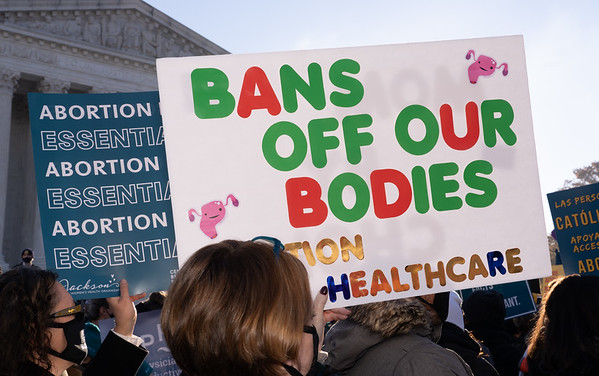
Bans Off Our Bodies Protest Sign

Reproductive Freedom

Dobbs v. Jackson Women’s Health Organization

The case concerns the constitutionality of a Mississippi law prohibiting abortions after the fifteenth week of pregnancy. The state used the case as a vehicle to ask the Supreme Court to take away the federal constitutional right to abortion it first recognized 50 years before in Roe v. Wade. On June 24, 2022, the Supreme Court of the United States accepted the state’s invitation and overturned Roe eliminating the federal constitutional right to abortion.
Dobbs V. Jackson Women’s Health Organization. Explore Case.
U.S. Supreme Court
Apr 2022
FBI v. Fazaga Plaintiffs

Privacy & Technology

+2 Ƶ

FBI v. Fazaga

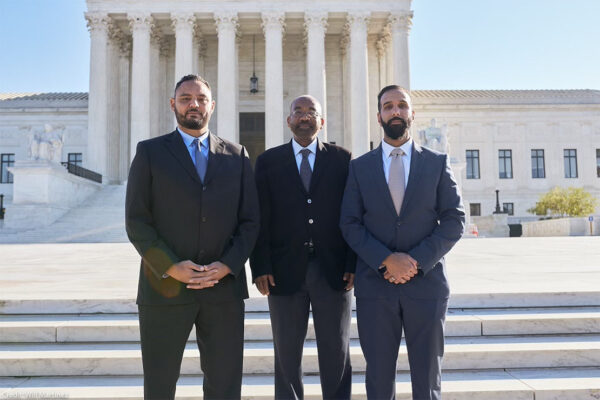
In a case scheduled to be argued before the U.S. Supreme Court on November 8, 2021, three Muslim Americans are challenging the FBI’s secret spying on them and their communities based on their religion, in violation of the Constitution and federal law. In what will likely be a landmark case, the plaintiffs — Yassir Fazaga, Ali Uddin Malik, and Yasser Abdelrahim — insist that the FBI cannot escape accountability for violating their religious freedom by invoking “state secrets.” The plaintiffs are represented by the Center for Immigration Law and Policy at UCLA School of Law, the Ƶof Southern California, the Ƶ, the Council for American Islamic Relations, and the law firm of Hadsell Stormer Renick & Dai.
Fbi V. Fazaga. Explore Case.
U.S. Supreme Court
Apr 2022
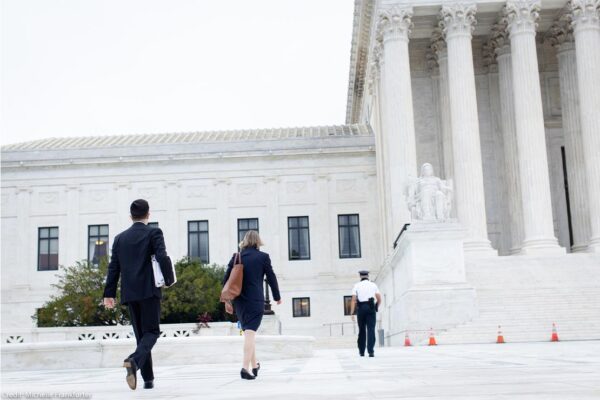
RFP attorneys Alexa Kolbi-Molinas and Andrew Beck heading towards the Supreme Court to argue the case.

Reproductive Freedom

Cameron v. EMW Women’s Surgical Center

In 2018, the Ƶ and the Ƶof Kentucky filed a suit on behalf of Kentucky abortion providers and their patients challenging a state law banning physicians from providing a safe and medically proven abortion method called dilation and evacuation, or “D&E.” If it were to take effect, this law would prevent many patients from being able to obtain an abortion altogether. After two courts held that the law is unconstitutional, the Supreme Court ruled in March 2022 that Kentucky Attorney General Cameron can continue his pursuit to push abortion out of reach by intervening in the underlying challenge to an abortion ban, which is proceeding in a lower court.
Cameron V. Emw Women’s Surgical Center. Explore Case.
U.S. Supreme Court
Jan 2022
Garland v. Gonzalez

Immigrants' Rights

Garland v. Gonzalez

Whether the Immigration and Nationality Act requires a bond hearing for immigrants subject to prolonged detention while seeking protection in the U.S. from persecution or torture.
Garland V. Gonzalez. Explore Case.
U.S. Supreme Court
Dec 2021
Whole Woman's Health v. Jackson

Reproductive Freedom

Whole Woman's Health v. Jackson

The Ƶ, the Ƶof Texas, and coalition partners filed a federal lawsuit on behalf of abortion providers and funds on July 13, 2021, challenging S.B. 8, a Texas law allowing private citizens to enforce a ban on abortion as early as six weeks in pregnancy—before many know they are pregnant. The ACLU’s challenge made its way to the U.S. Supreme Court three times in as many months. After hearing oral arguments in the case, the Court issued a decision on December 10, 2021, that ended the most promising pathways to blocking the ban. The Supreme Court’s decision makes it more difficult to obtain adequate relief from the courts and gives states the green light to ban abortion using bounty-hunting schemes. Texas’ abortion ban will remain in effect until relief can be secured from a court.
Whole Woman's Health V. Jackson. Explore Case.

All Cases

25 Supreme Court Cases during the 2021 Term

JF
U.S. Supreme Court
Oct 2022

Voting Rights

Racial Justice

Fitisemanu v. United States, et al. (Amicus)

On May 28, 2022 the Ƶ filed an amicus brief with the Supreme Court in a case, Fitisemanu v. United States, addressing the constitutionality of the federal law designating persons born in American Samoa as “non-citizen U.S. nationals.”
Explore case
Fitisemanu V. United States, Et Al. (amicus). Explore Case.
U.S. Supreme Court
Oct 2022
JF

Voting Rights

Racial Justice

Fitisemanu v. United States, et al. (Amicus)

On May 28, 2022 the Ƶ filed an amicus brief with the Supreme Court in a case, Fitisemanu v. United States, addressing the constitutionality of the federal law designating persons born in American Samoa as “non-citizen U.S. nationals.”
Fitisemanu V. United States, Et Al. (amicus). Explore Case.
Carson v. Makin
U.S. Supreme Court
Jun 2022

Religious Liberty

Carson v. Makin

Whether a Maine law that prohibits the use of taxpayer funding for religious instruction at religious schools is constitutional.
Explore case
Carson V. Makin. Explore Case.
U.S. Supreme Court
Jun 2022
Carson v. Makin

Religious Liberty

Carson v. Makin

Whether a Maine law that prohibits the use of taxpayer funding for religious instruction at religious schools is constitutional.
Carson V. Makin. Explore Case.
Nance v. Ward
U.S. Supreme Court
May 2022

Capital Punishment

Nance v. Ward

May a death-row prisoner use 42 U.S.C. § 1983 to challenge a state’s proposed method of execution as cruel and unusual under the Eighth Amendment, when his proposed alternative method of execution is not presently authorized under the extant state law?
Explore case
Nance V. Ward. Explore Case.
U.S. Supreme Court
May 2022
Nance v. Ward

Capital Punishment

Nance v. Ward

May a death-row prisoner use 42 U.S.C. § 1983 to challenge a state’s proposed method of execution as cruel and unusual under the Eighth Amendment, when his proposed alternative method of execution is not presently authorized under the extant state law?
Nance V. Ward. Explore Case.
Vega v. Tekoh
U.S. Supreme Court
May 2022

Criminal Law Reform

Vega v. Tekoh

May a person sue a police officer under 42 U.S.C. § 1983 for violating their Fifth Amendment right against self-incrimination by engaging in a custodial interrogation without issuing a Miranda warning and facilitating the introduction of their unwarned statement at their criminal trial?
Explore case
Vega V. Tekoh. Explore Case.
U.S. Supreme Court
May 2022
Vega v. Tekoh

Criminal Law Reform

Vega v. Tekoh

May a person sue a police officer under 42 U.S.C. § 1983 for violating their Fifth Amendment right against self-incrimination by engaging in a custodial interrogation without issuing a Miranda warning and facilitating the introduction of their unwarned statement at their criminal trial?
Vega V. Tekoh. Explore Case.
Shurtleff v. City of Boston
U.S. Supreme Court
May 2022

Free Speech

Shurtleff v. City of Boston

For more than a decade, Boston has allowed nearly 300 private groups to temporarily fly their flags outside of City Hall. Did the city violate the First Amendment when it denied Camp Constitution’s request to fly its flag for a single hour because the flag has a religious symbol?
Explore case
Shurtleff V. City Of Boston. Explore Case.
U.S. Supreme Court
May 2022
Shurtleff v. City of Boston

Free Speech

Shurtleff v. City of Boston

For more than a decade, Boston has allowed nearly 300 private groups to temporarily fly their flags outside of City Hall. Did the city violate the First Amendment when it denied Camp Constitution’s request to fly its flag for a single hour because the flag has a religious symbol?
Shurtleff V. City Of Boston. Explore Case.
1
23...

How Do Terms Work?

Between October and late June or early July the Supreme Court is “in session,” meaning it hears oral arguments, issues written decisions, and decides whether to take additional cases.

Submitting petitions

Our legal team at the Ƶfiles a cert petition to the U.S. Supreme Court, a type of petition that usually argues that a lower court has incorrectly decided an important question of law that violates civil rights and should be fixed to prevent similar confusion in similar cases.

term starts

U.S. Supreme Court decides to take a case

On average, the Court considers about 7,000 ‐ 8,000 petitions each term and accepts about 80 for oral argument.

Oral arguments

This is the period where the U.S. Supreme Court listens to our case in court.

U.S. Supreme Court makes final decisions

While the U.S. Supreme Court makes decisions throughout the term, many are released right before the term ends. If a decision doesn't go in our favor, we fight back!