All Cases

19 Supreme Court Cases during the 2010 Term
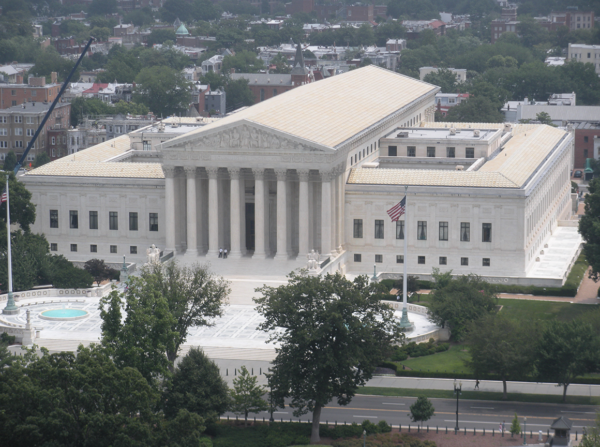
Supreme Court of the United States
U.S. Supreme Court
Jan 2015

National Security

Abdullah al-Kidd v. United States, et al.
The Fourth Amendment prohibits the arrest of criminal suspects without probable cause to believe they have committed a crime. Yet after 9/11, former Attorney General John Ashcroft and the U.S. Department of Justice implemented a policy of misusing the federal “material witness” statute to detain Muslim men for investigative purposes without probable cause to believe that they’d committed any crime. Pursuant to this policy, our client, Abdullah al-Kidd, a Kansas-born U.S. citizen and former football player at the University of Idaho, was arrested on a material witness warrant in 2003 and imprisoned without charges for 16 days, ostensibly because the government wanted his testimony in someone else’s criminal case. He was never called to testify and never criminally charged.
Explore case
Abdullah Al-kidd V. United States, Et Al.. Explore Case.
U.S. Supreme Court
Jan 2015
Supreme Court of the United States

National Security

Abdullah al-Kidd v. United States, et al.

The Fourth Amendment prohibits the arrest of criminal suspects without probable cause to believe they have committed a crime. Yet after 9/11, former Attorney General John Ashcroft and the U.S. Department of Justice implemented a policy of misusing the federal “material witness” statute to detain Muslim men for investigative purposes without probable cause to believe that they’d committed any crime. Pursuant to this policy, our client, Abdullah al-Kidd, a Kansas-born U.S. citizen and former football player at the University of Idaho, was arrested on a material witness warrant in 2003 and imprisoned without charges for 16 days, ostensibly because the government wanted his testimony in someone else’s criminal case. He was never called to testify and never criminally charged.
Abdullah Al-kidd V. United States, Et Al.. Explore Case.
NASA
U.S. Supreme Court
Nov 2012

National Security

Privacy & Technology

NASA v. Nelson

Whether the government may require Caltech employees working under contract at the Jet Propulsion Laboratory in "low-risk" and "non-sensitive" jobs to disclose, among other things, information about medical treatment and psychological counseling that they may have received in connection with illegal drug use.
Explore case
Nasa V. Nelson. Explore Case.
U.S. Supreme Court
Nov 2012
NASA

National Security

Privacy & Technology

NASA v. Nelson

Whether the government may require Caltech employees working under contract at the Jet Propulsion Laboratory in "low-risk" and "non-sensitive" jobs to disclose, among other things, information about medical treatment and psychological counseling that they may have received in connection with illegal drug use.
Nasa V. Nelson. Explore Case.
Wal-Mart v. Dukes
U.S. Supreme Court
Jun 2011

Women's Rights

Wal-Mart v. Dukes

Whether this sex discrimination case against Wal-Mart should be allowed to proceed as a class action.
Explore case
Wal-mart V. Dukes. Explore Case.
U.S. Supreme Court
Jun 2011
Wal-Mart v. Dukes

Women's Rights

Wal-Mart v. Dukes

Whether this sex discrimination case against Wal-Mart should be allowed to proceed as a class action.
Wal-mart V. Dukes. Explore Case.
J.D.B. v. North Carolina
U.S. Supreme Court
Jun 2011

Smart Justice

+2 Ƶ

J.D.B. v. North Carolina

Whether a child's age may be considered as part of the totality of circumstances in determining whether a suspect is in custody and must therefore be given Miranda warnings prior to any police interrogation.
Explore case
J.d.b. V. North Carolina. Explore Case.
U.S. Supreme Court
Jun 2011
J.D.B. v. North Carolina

Smart Justice

+2 Ƶ

J.D.B. v. North Carolina

Whether a child's age may be considered as part of the totality of circumstances in determining whether a suspect is in custody and must therefore be given Miranda warnings prior to any police interrogation.
J.d.b. V. North Carolina. Explore Case.
Flores-Villar v. United States
U.S. Supreme Court
Jun 2011

Smart Justice

+2 Ƶ

Flores-Villar v. United States

Whether the government may constitutionally make it more difficult for citizen fathers than citizen mothers to transmit citizenship to their out-of-wedlock children born outside the U.S.
Explore case
Flores-villar V. United States. Explore Case.
U.S. Supreme Court
Jun 2011
Flores-Villar v. United States

Smart Justice

+2 Ƶ

Flores-Villar v. United States

Whether the government may constitutionally make it more difficult for citizen fathers than citizen mothers to transmit citizenship to their out-of-wedlock children born outside the U.S.
Flores-villar V. United States. Explore Case.
1
23...

How Do Terms Work?

Between October and late June or early July the Supreme Court is “in session,” meaning it hears oral arguments, issues written decisions, and decides whether to take additional cases.

Submitting petitions

Our legal team at the Ƶfiles a cert petition to the U.S. Supreme Court, a type of petition that usually argues that a lower court has incorrectly decided an important question of law that violates civil rights and should be fixed to prevent similar confusion in similar cases.

term starts

U.S. Supreme Court decides to take a case

On average, the Court considers about 7,000 ‐ 8,000 petitions each term and accepts about 80 for oral argument.

Oral arguments

This is the period where the U.S. Supreme Court listens to our case in court.

U.S. Supreme Court makes final decisions

While the U.S. Supreme Court makes decisions throughout the term, many are released right before the term ends. If a decision doesn't go in our favor, we fight back!