Featured

U.S. Supreme Court
Nov 2025
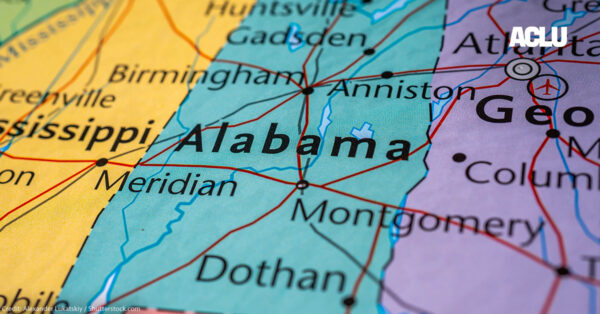
Alabama on a map of the United States of America

Voting Rights

Racial Justice

Allen v. Milligan

Whether Alabama’s congressional districts violate Section 2 of the Voting Rights Act because they discriminate against Black voters. We succeeded in winning a new map for 2024 elections which, for the first time, has two congressional district that provide Black voters a fair opportunity to elect candidates of their choosing despite multiple attempts by Alabama to stop us at the Supreme Court. Despite this win, Alabama is still defending its discriminatory map, and a trial was held in February 2025 to determine the map for the rest of the decade. In May 2025, a federal court ruled that Alabama's 2023 congressional map both violates Section 2 of the Voting Rights Act and was enacted by the Alabama Legislature with racially discriminatory intent.
Allen V. Milligan. Explore Case.

All Cases

29 Supreme Court Cases during the 2022 Term

United States v. Texas
U.S. Supreme Court
Feb 2023

Immigrants' Rights

United States v. Texas

Texas and other states are challenging ICE’s enforcement priorities, which direct agents to focus their arrests and deportations on immigrants with particular immigration law violations, such as those with criminal convictions. The Court will decide whether the states can bring these types of challenges, and if so, whether ICE’s priorities are legal.
Explore case
United States V. Texas. Explore Case.
U.S. Supreme Court
Feb 2023
United States v. Texas

Immigrants' Rights

United States v. Texas

Texas and other states are challenging ICE’s enforcement priorities, which direct agents to focus their arrests and deportations on immigrants with particular immigration law violations, such as those with criminal convictions. The Court will decide whether the states can bring these types of challenges, and if so, whether ICE’s priorities are legal.
United States V. Texas. Explore Case.
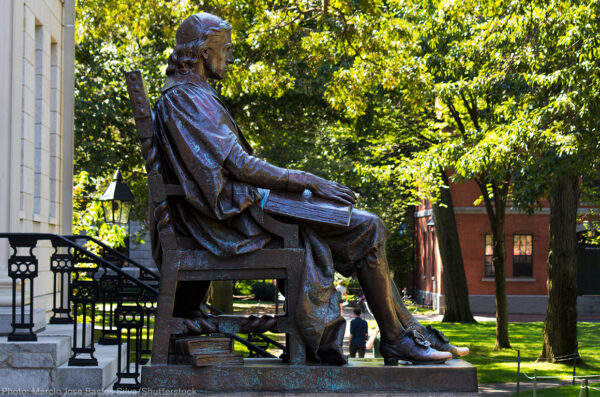
Statue of John Harvard on Harvard University's campus
U.S. Supreme Court
Feb 2023

Racial Justice

Students for Fair Admissions v. Harvard; Students for Fair Admissions v. UNC

This lawsuit contends that the consideration of race as an affirmative action measure in admissions at Harvard and at UNC constitutes racial discrimination in violation of the Equal Protection Clause.
Explore case
Students For Fair Admissions V. Harvard; Students For Fair Admissions V. Unc. Explore Case.
U.S. Supreme Court
Feb 2023
Statue of John Harvard on Harvard University's campus

Racial Justice

Students for Fair Admissions v. Harvard; Students for Fair Admissions v. UNC

This lawsuit contends that the consideration of race as an affirmative action measure in admissions at Harvard and at UNC constitutes racial discrimination in violation of the Equal Protection Clause.
Students For Fair Admissions V. Harvard; Students For Fair Admissions V. Unc. Explore Case.
Person with a graduation cap
U.S. Supreme Court
Feb 2023

Racial Justice

Biden v. Nebraska; Department of Education v. Brown

This case concerns whether the Department of Education acted within its administrative authority in issuing its student-borrower debt relief plan.
Explore case
Biden V. Nebraska; Department Of Education V. Brown. Explore Case.
U.S. Supreme Court
Feb 2023
Person with a graduation cap

Racial Justice

Biden v. Nebraska; Department of Education v. Brown

This case concerns whether the Department of Education acted within its administrative authority in issuing its student-borrower debt relief plan.
Biden V. Nebraska; Department Of Education V. Brown. Explore Case.
Social media apps on a smart phone.
U.S. Supreme Court
Feb 2023

Privacy & Technology

+2 Ƶ

Twitter, Inc., v. Taamneh

The Supreme Court will decide whether a social media or other platform can be liable for “aiding and abetting” a terrorist attack merely because it failed to adequately block content valorizing terrorism, even where the platform has policies barring terrorist content.
Explore case
Twitter, Inc., V. Taamneh. Explore Case.
U.S. Supreme Court
Feb 2023
Social media apps on a smart phone.

Privacy & Technology

+2 Ƶ

Twitter, Inc., v. Taamneh

The Supreme Court will decide whether a social media or other platform can be liable for “aiding and abetting” a terrorist attack merely because it failed to adequately block content valorizing terrorism, even where the platform has policies barring terrorist content.
Twitter, Inc., V. Taamneh. Explore Case.
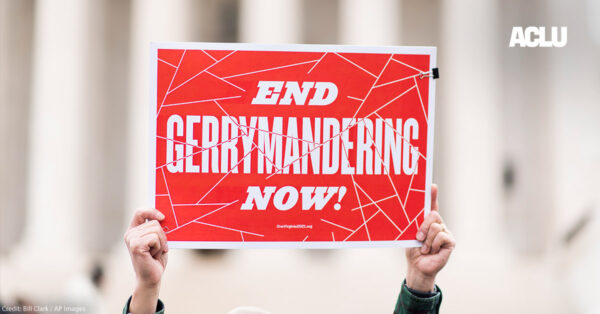
Gerrymandering activists gather on the steps of the Supreme Court as the court prepares to hear the the Benisek v. Lamone case on Wednesday, March 28, 2018.
U.S. Supreme Court
Feb 2023

Voting Rights

Huffman v. Neiman

This case asks whether the Elections Clause of the U.S. Constitution bars the Ohio state court from enforcing redistricting requirements in the Ohio constitution that prohibit partisan gerrymandering.
Explore case
Huffman V. Neiman. Explore Case.
U.S. Supreme Court
Feb 2023
Gerrymandering activists gather on the steps of the Supreme Court as the court prepares to hear the the Benisek v. Lamone case on Wednesday, March 28, 2018.

Voting Rights

Huffman v. Neiman

This case asks whether the Elections Clause of the U.S. Constitution bars the Ohio state court from enforcing redistricting requirements in the Ohio constitution that prohibit partisan gerrymandering.
Huffman V. Neiman. Explore Case.
23
4
56

How Do Terms Work?

Between October and late June or early July the Supreme Court is “in session,” meaning it hears oral arguments, issues written decisions, and decides whether to take additional cases.

Submitting petitions

Our legal team at the Ƶfiles a cert petition to the U.S. Supreme Court, a type of petition that usually argues that a lower court has incorrectly decided an important question of law that violates civil rights and should be fixed to prevent similar confusion in similar cases.

term starts

U.S. Supreme Court decides to take a case

On average, the Court considers about 7,000 ‐ 8,000 petitions each term and accepts about 80 for oral argument.

Oral arguments

This is the period where the U.S. Supreme Court listens to our case in court.

U.S. Supreme Court makes final decisions

While the U.S. Supreme Court makes decisions throughout the term, many are released right before the term ends. If a decision doesn't go in our favor, we fight back!