Featured

U.S. Supreme Court
Mar 2019
Nielsen v. Preap

Immigrants' Rights

Nielsen v. Preap

Whether the government can require that certain people are detained for the duration of their deportation proceedings 鈥 without a hearing 鈥 because they have past criminal records.
Nielsen V. Preap. Explore Case.

All Cases

15 Supreme Court Cases during the 2018 Term

Nieves v. Bartlett, 17-1174
U.S. Supreme Court
Feb 2019

Free Speech

Criminal Law Reform

Nieves v. Bartlett, 17-1174

Whether a plaintiff who claims that a police officer retaliated against his First Amendment-protected expression by arresting him for a misdemeanor is barred from suing if the police had probable cause for his arrest.
Explore case
Nieves V. Bartlett, 17-1174. Explore Case.
U.S. Supreme Court
Feb 2019
Nieves v. Bartlett, 17-1174

Free Speech

Criminal Law Reform

Nieves v. Bartlett, 17-1174

Whether a plaintiff who claims that a police officer retaliated against his First Amendment-protected expression by arresting him for a misdemeanor is barred from suing if the police had probable cause for his arrest.
Nieves V. Bartlett, 17-1174. Explore Case.
Manhattan Community Access Corp. v. Halleck, 17鈥1702
U.S. Supreme Court
Feb 2019

Free Speech

Manhattan Community Access Corp. v. Halleck, 17鈥1702

Whether the private operator of a public access channel in New York City is a state actor, and therefore bound by the First Amendment, for the purpose of selecting and scheduling its broadcasts, where federal, state, and city laws and policies so strictly circumscribe its content decisions that all independent editorial judgment is displaced.
Explore case
Manhattan Community Access Corp. V. Halleck, 17鈥1702. Explore Case.
U.S. Supreme Court
Feb 2019
Manhattan Community Access Corp. v. Halleck, 17鈥1702

Free Speech

Manhattan Community Access Corp. v. Halleck, 17鈥1702

Whether the private operator of a public access channel in New York City is a state actor, and therefore bound by the First Amendment, for the purpose of selecting and scheduling its broadcasts, where federal, state, and city laws and policies so strictly circumscribe its content decisions that all independent editorial judgment is displaced.
Manhattan Community Access Corp. V. Halleck, 17鈥1702. Explore Case.
Timbs v. Indiana
U.S. Supreme Court
Sep 2018

Racial Justice

Timbs v. Indiana

Whether the Eighth Amendment鈥檚 Excessive Fines Clause is incorporated against the States, and therefore prohibits not only federal, but also state and local, fines, fees and forfeitures that are excessive.
Explore case
Timbs V. Indiana. Explore Case.
U.S. Supreme Court
Sep 2018
Timbs v. Indiana

Racial Justice

Timbs v. Indiana
Whether the Eighth Amendment鈥檚 Excessive Fines Clause is incorporated against the States, and therefore prohibits not only federal, but also state and local, fines, fees and forfeitures that are excessive.
Timbs V. Indiana. Explore Case.
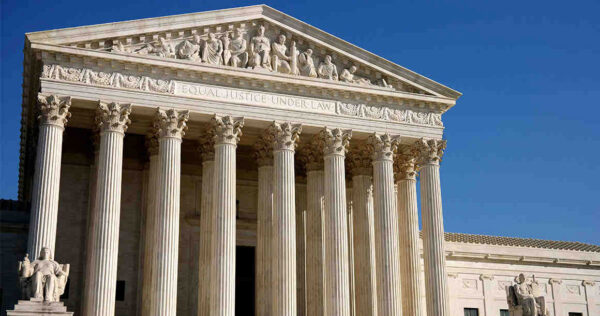
Supreme Court building
U.S. Supreme Court
Sep 2018

Smart Justice

Gamble v. United States

Whether the 鈥渄ual-sovereignty鈥 exception to the Double Jeopardy Clause鈥攚hereby a state and the federal government can each prosecute a person for the same crime, even where neither would be able to do so alone鈥攙iolates the Fifth Amendment to the Constitution.
Explore case
Gamble V. United States. Explore Case.
U.S. Supreme Court
Sep 2018
Supreme Court building

Smart Justice

Gamble v. United States

Whether the 鈥渄ual-sovereignty鈥 exception to the Double Jeopardy Clause鈥攚hereby a state and the federal government can each prosecute a person for the same crime, even where neither would be able to do so alone鈥攙iolates the Fifth Amendment to the Constitution.
Gamble V. United States. Explore Case.
Gundy v. United States
U.S. Supreme Court
Jun 2018

Criminal Law Reform

Gundy v. United States

Whether it violates the separation of powers for Congress to delegate to the Attorney General, the nation鈥檚 chief prosecutor, the unfettered authority both to decide whether a criminal law should apply and to prosecute violators of that law.
Explore case
Gundy V. United States. Explore Case.
U.S. Supreme Court
Jun 2018
Gundy v. United States

Criminal Law Reform

Gundy v. United States

Whether it violates the separation of powers for Congress to delegate to the Attorney General, the nation鈥檚 chief prosecutor, the unfettered authority both to decide whether a criminal law should apply and to prosecute violators of that law.
Gundy V. United States. Explore Case.
12
3

How Do Terms Work?

Between October and late June or early July the Supreme Court is 鈥渋n session,鈥 meaning it hears oral arguments, issues written decisions, and decides whether to take additional cases.

Submitting petitions

Our legal team at the 桃子视频files a cert petition to the U.S. Supreme Court, a type of petition that usually argues that a lower court has incorrectly decided an important question of law that violates civil rights and should be fixed to prevent similar confusion in similar cases.

term starts

U.S. Supreme Court decides to take a case

On average, the Court considers about 7,000 鈥 8,000 petitions each term and accepts about 80 for oral argument.

Oral arguments

This is the period where the U.S. Supreme Court listens to our case in court.

U.S. Supreme Court makes final decisions

While the U.S. Supreme Court makes decisions throughout the term, many are released right before the term ends. If a decision doesn't go in our favor, we fight back!