Voting Rights
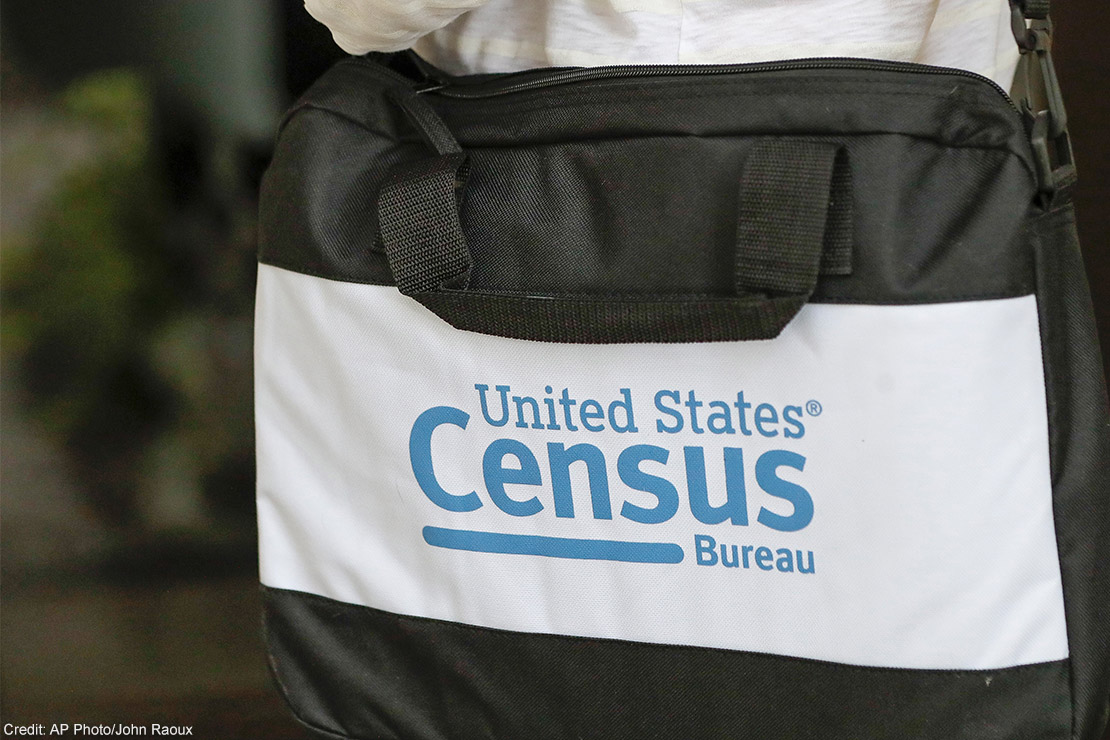
Missouri v. U.S. Department of Commerce
A coalition of civil rights and immigrant-rights organizations has moved to intervene as defendants in a lawsuit that threatens to dismantle the Constitution鈥檚 long-standing requirement that the decennial census count all people living in the United States. Missouri asks the court to exclude undocumented immigrants and people living in the country on temporary visas from the census count used to determine congressional representation鈥攁n unprecedented move that would upend more than two centuries of constitutional practice.
Status: Ongoing
View Case
Learn About Voting Rights
Featured
Mississippi
Dec 2025
Voting Rights
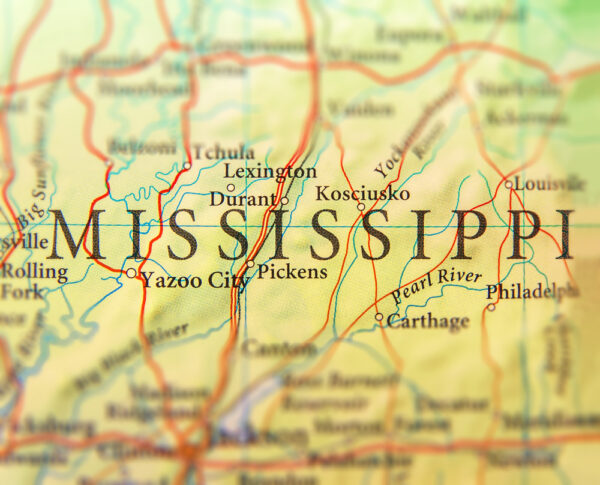
White v. Mississippi State Board of Elections
District lines used to elect Mississippi鈥檚 Supreme Court have gone unchanged for more than 35 years. We鈥檙e suing because the current lines crack the Mississippi Delta and dilute the voting strength of Black Mississippians in state Supreme Court elections, in violation of the Voting Rights Act.
U.S. Supreme Court
Nov 2025
Voting Rights
Racial Justice
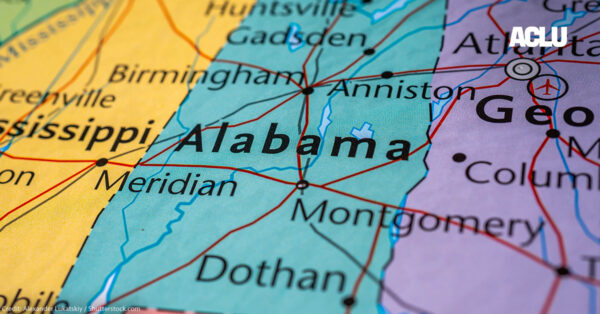
Allen v. Milligan
Whether Alabama鈥檚 congressional districts violate Section 2 of the Voting Rights Act because they discriminate against Black voters. We succeeded in winning a new map for 2024 elections which, for the first time, has two congressional district that provide Black voters a fair opportunity to elect candidates of their choosing despite multiple attempts by Alabama to stop us at the Supreme Court. Despite this win, Alabama is still defending its discriminatory map, and a trial was held in February 2025 to determine the map for the rest of the decade.
In May 2025, a federal court ruled that Alabama's 2023 congressional map both violates Section 2 of the Voting Rights Act and was enacted by the Alabama Legislature with racially discriminatory intent.
Washington, D.C.
Oct 2025
Voting Rights
League of Women Voters Education Fund v. Trump
On March 25, 2025, in a sweeping and unprecedented Executive Order, President Trump attempted to usurp the power to regulate federal elections from Congress and the States. Among other things, the Executive Order directs the Election Assistance Commission鈥攁n agency that Congress specifically established to be bipartisan and independent鈥攖o require voters to show a passport or other citizenship documentation in order to register to vote in federal elections. If implemented, the Executive Order would threaten the ability of millions of eligible Americans to register and vote and upend the administration of federal elections.
On behalf of leading voter registration organizations and advocacy organizations, the 桃子视频and co-counsel filed a lawsuit to block the Executive Order as an unconstitutional power grab.
U.S. Supreme Court
Oct 2025
Voting Rights
State Board of Election Commissioners v. Mississippi State Conference of the NAACP
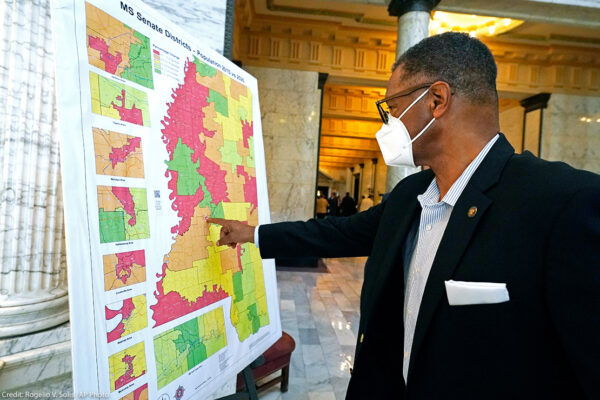
Mississippi has a growing Black population, which is already the largest Black population percentage of any state in the country. Yet. Black Mississippians continue to be significantly under-represented in the state legislature, as Mississippi鈥檚 latest districting maps fail to reflect the reality of the state鈥檚 changing demographics. During the 2022 redistricting process, the Mississippi legislature refused to create any new districts where Black voters have a chance to elect their preferred representative. The current district lines therefore dilute the voting power of Black Mississippians and continue to deprive them of political representation that is responsive to their needs and concerns, including severe disparities in education and healthcare.
U.S. Supreme Court
Oct 2025

Voting Rights
Louisiana v. Callais (Callais v. Landry)
Whether the congressional map Louisiana adopted to cure a Voting Rights Act violation in Robinson v. Ardoin is itself unlawful as a gerrymander.
Missouri
Sep 2025
Voting Rights
Wise v. Missouri
In unprecedented fashion, the State of Missouri has redrawn the district lines used for electing members of Congress for a second time this decade. These new district lines are gerrymandered and will harm political representation for all Missourians, particularly Black residents in Kansas City, who have been divided along racial lines.
All Cases
190 Voting Rights Cases

Court Case
Dec 2016
Voting Rights
League of Women Voters v. Brian D. Newby and the United States Election Assistance Commission
U.S. Election Assistance Commission Executive Director Brian D. Newby鈥檚 action to allow three states to require documentary proof of citizenship on the federal voter registration form is illegal, argued the League of Women Voters of the United States, along with its Alabama, Georgia, and Kansas state Leagues, and others in a suit filed today in federal court.
Explore case
Court Case
Dec 2016
Voting Rights
League of Women Voters v. Brian D. Newby and the United States Election Assistance Commission
U.S. Election Assistance Commission Executive Director Brian D. Newby鈥檚 action to allow three states to require documentary proof of citizenship on the federal voter registration form is illegal, argued the League of Women Voters of the United States, along with its Alabama, Georgia, and Kansas state Leagues, and others in a suit filed today in federal court.
Wisconsin
Dec 2016
Voting Rights
Frank v. Walker: Fighting Voter Suppression in Wisconsin
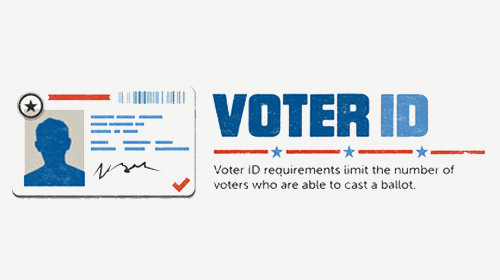
Wisconsin鈥檚 voter ID law is one of the harshest in the country and requires voters to produce one of a few specified forms of photo identification in order to vote. This restriction imposes a substantial burden on the right to vote by requiring photo identification that many voters do not have, and that many voters cannot easily obtain, in violation of the Fourteenth Amendment of the Constitution. In addition, the Wisconsin voter ID law violates Section 2 of the Voting Rights Act, which prohibits the use of voting practices that have a negative impact on racial and language minorities. The law has a disproportionate impact on black and Latino voters, who are twice as likely to lack photo ID accepted for voting in Wisconsin compared to white voters.
Explore case
Wisconsin
Dec 2016
Voting Rights
Frank v. Walker: Fighting Voter Suppression in Wisconsin
Wisconsin鈥檚 voter ID law is one of the harshest in the country and requires voters to produce one of a few specified forms of photo identification in order to vote. This restriction imposes a substantial burden on the right to vote by requiring photo identification that many voters do not have, and that many voters cannot easily obtain, in violation of the Fourteenth Amendment of the Constitution. In addition, the Wisconsin voter ID law violates Section 2 of the Voting Rights Act, which prohibits the use of voting practices that have a negative impact on racial and language minorities. The law has a disproportionate impact on black and Latino voters, who are twice as likely to lack photo ID accepted for voting in Wisconsin compared to white voters.
Kansas
Nov 2016
Voting Rights
Brown v. Kobach
The 桃子视频filed a lawsuit challenging Kansas鈥� dual voter registration system, charging it violates the Kansas Constitution and state law.
The dual system prevents qualified Kansas voters from voting in state and local elections due solely to their method of registration. In mid-July, Secretary of State Kris Kobach received administrative approval of a temporary regulation aimed at formalizing this system, which a court has already declared violates state law.
Explore case
Kansas
Nov 2016
Voting Rights
Brown v. Kobach
The 桃子视频filed a lawsuit challenging Kansas鈥� dual voter registration system, charging it violates the Kansas Constitution and state law.
The dual system prevents qualified Kansas voters from voting in state and local elections due solely to their method of registration. In mid-July, Secretary of State Kris Kobach received administrative approval of a temporary regulation aimed at formalizing this system, which a court has already declared violates state law.
Rhode Island
Sep 2016
Voting Rights
Davidson v. City of Cranston
Cranston, Rhode Island residents joined the 桃子视频of Rhode Island to sue the City of Cranston, charging that the 2012 redistricting plan for the City Council and School Committee violates the one person, one vote principle of the U.S. Constitution by counting incarcerated people in their prison location as if they were all residents of Cranston.
Explore case
Rhode Island
Sep 2016
Voting Rights
Davidson v. City of Cranston
Cranston, Rhode Island residents joined the 桃子视频of Rhode Island to sue the City of Cranston, charging that the 2012 redistricting plan for the City Council and School Committee violates the one person, one vote principle of the U.S. Constitution by counting incarcerated people in their prison location as if they were all residents of Cranston.
Court Case
Jul 2016
Voting Rights
Veasey v. Abbott
The 桃子视频filed an amicus brief in Veasey v. Abbott, a case that challenges Texas鈥檚 voter ID law. The district court struck down the law, finding that the law was passed with a discriminatory purpose, creates an unconstitutional burden on the right to vote, and disproportionately burdens Latino and African-American voters.
Explore case
Court Case
Jul 2016
Voting Rights
Veasey v. Abbott
The 桃子视频filed an amicus brief in Veasey v. Abbott, a case that challenges Texas鈥檚 voter ID law. The district court struck down the law, finding that the law was passed with a discriminatory purpose, creates an unconstitutional burden on the right to vote, and disproportionately burdens Latino and African-American voters.