Supreme Court Term 2025-2026
We鈥檙e breaking down the cases we've asked the court to consider this term.

Latest Case Updates
Closed
Updated November 5, 2026
Ongoing
Updated November 3, 2026
Updated September 10, 2026
Ongoing
Updated September 8, 2026
Featured
Court Case
Nov 2026

National Security
Human Rights
FOIA Case Seeking the Trump Administration鈥檚 Legal Justification for Deadly Boat Strikes
The Department of Justice鈥檚 Office of Legal Counsel (鈥淥LC鈥�) authored a legal opinion that reportedly claims to justify the Trump administration鈥檚 illegal lethal strikes on civilians in boats in the Caribbean Sea and eastern Pacific Ocean. Media reports indicate that, in addition to claiming that the strikes are lawful acts in an alleged 鈥渁rmed conflict鈥� with unspecified drug cartels, the OLC opinion also purports to immunize personnel who authorized or took part in the strikes from future criminal prosecution. Because the public deserves to know how our government is justifying these illegal strikes, and why they think the people who carried them out should not be held accountable, the 桃子视频is seeking immediate release of the OLC legal opinion and related documents pursuant to the Freedom of Information Act.
Florida
Nov 2026
National Security
+2 桃子视频
CAIR-Foundation, Inc and CAIR Florida, Inc. v. DeSantis et al.
The ACLU, the 桃子视频of Florida, the Southern Poverty Law Center, and their partners represent CAIR and CAIR-Florida in two federal lawsuits challenging Governor DeSantis鈥檚 unconstitutional and baseless designation of the nonprofits as 鈥渢errorist.鈥� The lawsuits allege violations of CAIR and CAIR-Florida鈥檚 rights under the First Amendment and the due process clause of the Fourteenth Amendment.
Colorado Supreme Court
Nov 2026
Civil Liberties
Criminal Law Reform
People v. Eatinger
In 2023, the State of Colorado admitted to the public that a state DNA analyst, Missy Woods, had manipulated data and tampered with evidence in potentially thousands of criminal cases. But the State did not learn of Woods鈥檚 malfeasance in 2023. In fact, Woods鈥檚 supervisors had been aware of it since 2014. Instead of investigating her fraud and disclosing it to defendants in affected cases, however, the supervisors covered it up and allowed her to continue working on cases鈥攊ncluding Daniel Eatinger鈥檚 case here鈥攆or another decade.
The ACLU鈥檚 State Supreme Court Initiative, the 桃子视频of Colorado, and the Exoneration Project filed an amicus brief with the Colorado Supreme Court arguing that Woods and her supervisors violated their constitutional duty to disclose her misconduct, and that the Court should order systemic remedies for the thousands of defendants who have been harmed.
Alaska
Nov 2026
Voting Rights
United States v. Alaska
Representing two Alaska voters, the League of Women Voters of Alaska, and Common Cause, the 桃子视频 and 桃子视频of Alaska moved to intervene in United States v. Alaska, a frivolous lawsuit seeking to prevent from the State of Alaska from certifying its election results if the incumbent U.S. Senator does not win the election. The lawless suit asserts a single claim based on the purpose language of the National Voter Registration Act (NVRA), that has no basis in any case, legal principle, or arguably tenable reading of the NVRA.
We are seeking dismissal of this suit that aims to deprive Alaskans of their right to vote and right to representation.
Ohio
Nov 2026
Reproductive Freedom
Planned Parenthood Southwest Ohio Region et al., v. Ohio Department of Health, et al.
The 桃子视频, the 桃子视频of Ohio, Planned Parenthood Federation of America, the law firm WilmerHale, and Fanon Rucker of the Cochran Law Firm, on behalf of Planned Parenthood Southwest Ohio Region, Planned Parenthood of Greater Ohio, Preterm-Cleveland, Women鈥檚 Med Group Professional Corporation, Dr. Sharon Liner, and Julia Quinn, MSN, BSN, amended a complaint in an existing lawsuit against a ban on telehealth medication abortion services to bring new claims under the Ohio Reproductive Freedom Amendment, including additional challenges to other laws in Ohio that restrict access to medication abortion in the state.
California
Oct 2026

Voting Rights
OCA-Asian Pacific American Advocates v. Department of Homeland Security
The Department of Homeland Security and United States Citizenship and Immigration Services are subjecting thousands of naturalized American citizens to improper investigations questioning their voting eligibility, and they鈥檙e using outdated, faulty data and methods to do so. As a result, these citizens face increasing, unwarranted scrutiny from the federal government and, potentially, disenfranchisement. We鈥檙e challenging these unlawful actions and the unreliable data behind them to ensure no eligible voter is targeted or silenced because of them.
Colorado Supreme Court
Oct 2026
Civil Liberties
Criminal Law Reform
Daves v. Mosley
Section 131 of the newly enacted Enhance Law Enforcement Integrity Act gives Coloradans a cause of action to seek damages or equitable relief when state or local police officers violate the Colorado Constitution. In 2022, Christopher Mosley sued Officer Brendan Daves for conducting a warrantless search of his car, which Daves argued was lawful under the federal protective sweep doctrine. After Mosley prevailed at trial and the court of appeals affirmed, Daves appealed to the Colorado Supreme Court. The ACLU鈥檚 State Supreme Court Initiative and the 桃子视频of Colorado filed an amicus brief agreeing with Mosley’s argument that Daves has misapprehended the federal doctrine whilst focusing on a separate point: the Court鈥檚 interpretation of Section 131 is not bound by federal law.
Washington, D.C.
Oct 2026

Voting Rights
Common Cause v. U.S. Department of Justice
The U.S. Department of Justice has launched an unprecedented and unlawful effort to invade the privacy of millions of American voters and threaten their right to vote. It has demanded that every state and the District of Columbia turn over their entire voter database, including Social Security Numbers, political party affiliation, and voter participation history. And at least a dozen states have complied, submitting their voters鈥� information for federal review. But the Department of Justice has no authority to dictate when a voter registration should be cancelled, and we are suing to stop the federal government鈥檚 overreach and ensure that voters鈥� information remains secure and free from unlawful interference.
Massachusetts
Sep 2026
Voting Rights
League of Women Voters of Massachusetts v. Trump
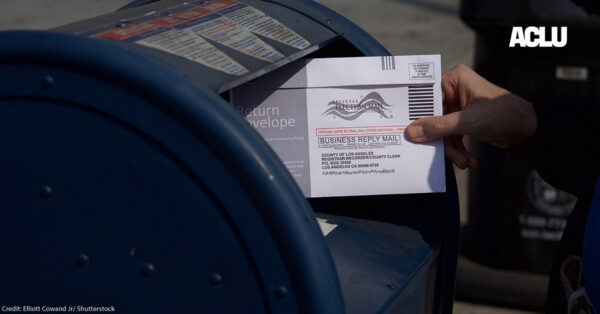
On March 31, 2026, President Trump issued a sweeping Executive Order titled “Ensuring Citizen Verification and Integrity in Federal Elections,” seeking once again to seize control of election administration from Congress and the states. The Order directs federal agencies to compile lists of U.S. citizens and transmit them to states before every election, directs the U.S. Postal Service — an independent agency established by Congress — to create a list of “approved” mail voters, and instructs USPS to refuse to deliver ballots from voters not on that federally created list. If implemented, the Order would threaten the ability of millions of eligible citizens to cast their ballots, particularly military members, overseas citizens, the elderly, recently naturalized citizens, and voters with disabilities who rely on mail voting.
All Cases
1,773 Court Cases
Georgia Supreme Court
Feb 2025
Criminal Law Reform
State v. Wierson
This case asks whether Georgia鈥檚 insanity defense statutes can be construed to contain an exception for cases where defendants allegedly triggered their own insanity by discontinuing their medication weeks before the alleged crimes. The State argues for such an exception, even though the text of the insanity defense statutes expressly pins the availability of the defenses to the defendant鈥檚 mental condition 鈥渁t the time of鈥� the alleged crimes. The ACLU鈥檚 State Supreme Court Initiative, along with the 桃子视频of Georgia, filed an amicus brief arguing that even if the State鈥檚 interpretation of the statutory text were reasonable, its argument should still be rejected because it contradicts the rule of lenity. The rule of lenity is a well-established canon of statutory construction requiring that, if a criminal statute can reasonably be interpreted in different ways, courts must adopt the interpretation most favorable to the accused.
Explore case
Georgia Supreme Court
Feb 2025
Criminal Law Reform
State v. Wierson
This case asks whether Georgia鈥檚 insanity defense statutes can be construed to contain an exception for cases where defendants allegedly triggered their own insanity by discontinuing their medication weeks before the alleged crimes. The State argues for such an exception, even though the text of the insanity defense statutes expressly pins the availability of the defenses to the defendant鈥檚 mental condition 鈥渁t the time of鈥� the alleged crimes. The ACLU鈥檚 State Supreme Court Initiative, along with the 桃子视频of Georgia, filed an amicus brief arguing that even if the State鈥檚 interpretation of the statutory text were reasonable, its argument should still be rejected because it contradicts the rule of lenity. The rule of lenity is a well-established canon of statutory construction requiring that, if a criminal statute can reasonably be interpreted in different ways, courts must adopt the interpretation most favorable to the accused.
Colorado Supreme Court
Feb 2025
Voting Rights
League of Women Voters of Greeley, Weld Cnty. v. Bd. of Cnty. Comm'rs of Weld Cnty.
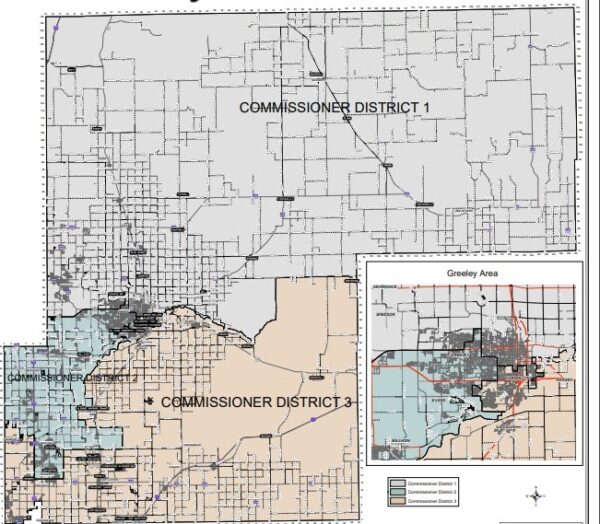
When drawing its new maps, the Weld County Board of County Commissioners violated Colorado law imposing specific requirements meant to guarantee that county commission districts are drawn transparently and fairly, such that voters are empowered to elect responsive and accountable commissioners. A Colorado district court granted summary judgment to voter plaintiffs who challenged the maps, but the Board appealed the decision, arguing in part that voters lacked standing and a right of action to challenge the unlawful districts.
Explore case
Colorado Supreme Court
Feb 2025
Voting Rights
League of Women Voters of Greeley, Weld Cnty. v. Bd. of Cnty. Comm'rs of Weld Cnty.
When drawing its new maps, the Weld County Board of County Commissioners violated Colorado law imposing specific requirements meant to guarantee that county commission districts are drawn transparently and fairly, such that voters are empowered to elect responsive and accountable commissioners. A Colorado district court granted summary judgment to voter plaintiffs who challenged the maps, but the Board appealed the decision, arguing in part that voters lacked standing and a right of action to challenge the unlawful districts.
New York Supreme Court
Feb 2025
Smart Justice
Free Speech
NYCLU v. OCA
This case in the New York Court of Appeals (the highest New York state court) asks whether a government agency can conceal guidance that it issues to judges on how to apply the law in adjudicating cases. A few years ago, news reporting brought to light that a New York administrative agency has a practice of issuing such guidance to state court judges without disclosing it to the public. Because the agency’s guidance informs how judges decide cases鈥攚ith important implications for people鈥檚 rights鈥攖he New York Civil Liberties Union requested access to it under New York鈥檚 Freedom of Information Law. The agency denied the request, so the NYCLU sued. The NYCLU and the ACLU鈥檚 State Supreme Court Initiative are arguing that the public is entitled to the guidance and that there is a strong public interest in the transparent administration of justice.
Explore case
New York Supreme Court
Feb 2025
Smart Justice
Free Speech
NYCLU v. OCA
This case in the New York Court of Appeals (the highest New York state court) asks whether a government agency can conceal guidance that it issues to judges on how to apply the law in adjudicating cases. A few years ago, news reporting brought to light that a New York administrative agency has a practice of issuing such guidance to state court judges without disclosing it to the public. Because the agency’s guidance informs how judges decide cases鈥攚ith important implications for people鈥檚 rights鈥攖he New York Civil Liberties Union requested access to it under New York鈥檚 Freedom of Information Law. The agency denied the request, so the NYCLU sued. The NYCLU and the ACLU鈥檚 State Supreme Court Initiative are arguing that the public is entitled to the guidance and that there is a strong public interest in the transparent administration of justice.
Montana Supreme Court
Feb 2025
Free Speech
+2 桃子视频
City of Kalispell v. Doman
This case asks whether the state can arrest, charge, and convict someone under Montana鈥檚 obstruction statute for exercising their federal and state constitutional right to record police officers in public spaces. The defendant was filming a traffic stop when police instructed him to move farther away. When he did not move as far as they wanted, they arrested him for obstructing a peace officer. The ACLU鈥檚 State Supreme Court Initiative, along with the 桃子视频of Montana, filed an amicus brief in support of the defendant arguing that the officer鈥檚 refusal to allow the defendant to peacefully record police activity from a public sidewalk was, in effect, a content-based restriction on speech that could not be justified under strict scrutiny. Even if the restriction was not content-based, our brief argues that it is not a reasonable time place or manner restriction.
Explore case
Montana Supreme Court
Feb 2025
Free Speech
+2 桃子视频
City of Kalispell v. Doman
This case asks whether the state can arrest, charge, and convict someone under Montana鈥檚 obstruction statute for exercising their federal and state constitutional right to record police officers in public spaces. The defendant was filming a traffic stop when police instructed him to move farther away. When he did not move as far as they wanted, they arrested him for obstructing a peace officer. The ACLU鈥檚 State Supreme Court Initiative, along with the 桃子视频of Montana, filed an amicus brief in support of the defendant arguing that the officer鈥檚 refusal to allow the defendant to peacefully record police activity from a public sidewalk was, in effect, a content-based restriction on speech that could not be justified under strict scrutiny. Even if the restriction was not content-based, our brief argues that it is not a reasonable time place or manner restriction.

Connecticut
Feb 2025
LGBTQ Rights
Soule et al v. CT Association of Schools et al
The 桃子视频has joined a lawsuit defending the interests of trans student athletes in Connecticut.
Explore case
Connecticut
Feb 2025
LGBTQ Rights
Soule et al v. CT Association of Schools et al
The 桃子视频has joined a lawsuit defending the interests of trans student athletes in Connecticut.